South Africa’s energy resilience challenge extends beyond keeping businesses and households connected.
For municipalities, uninterrupted electricity is essential to maintaining critical services such as water treatment, sanitation and wastewater management.
A microgrid developed for the Hartenbos Wastewater Treatment Works in Mossel Bay demonstrates how municipalities can use distributed energy infrastructure to strengthen service continuity while also reducing electricity costs.
The project was originally conceived when loadshedding posed a significant operational risk to municipal infrastructure.
Wastewater treatment facilities depend on continuous pumping, and prolonged power interruptions can cause effluent to accumulate, overflow and potentially enter rivers and freshwater systems.
The purpose of the project was therefore to ensure that the treatment works could continue operating independently when the electricity supply was disrupted.
The Mossel Bay microgrid combines several energy sources within one integrated system. These include a photovoltaic solar plant, a battery energy storage system, diesel generators and the municipal electricity grid.
By combining these resources, the facility is not dependent on a single source of energy. The system can draw on solar power when available, use stored electricity from the batteries, access the grid when appropriate and rely on diesel generation when required.
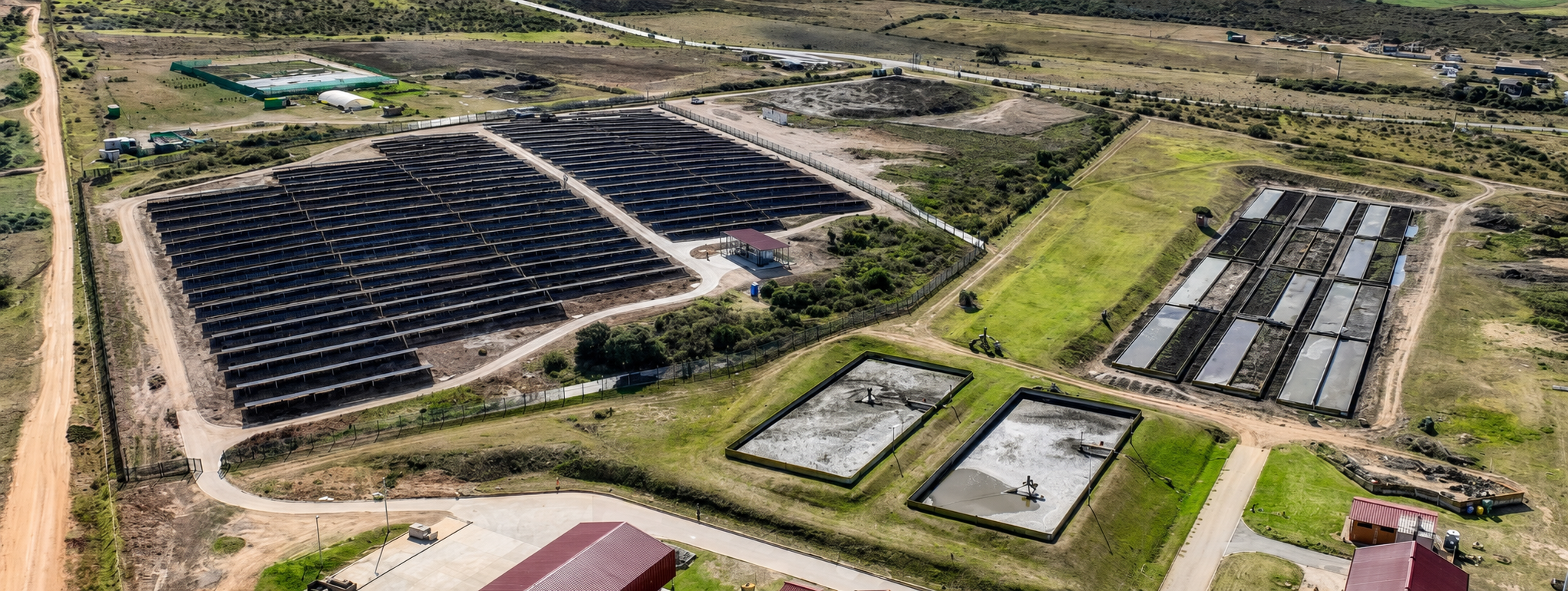
The facility includes a 2.56MWp solar photovoltaic plant occupying approximately 2.5 hectares, a 4.8MWh battery energy storage system and diesel generation capacity of 1.6MW. This infrastructure supports a relatively constant site load of approximately 700kW.
The system was deliberately designed with more capacity than the facility’s average load might appear to require. This was necessary because solar generation in the southern Cape varies considerably between seasons.
According to the case study, winter solar generation can fall to approximately one-third of summer output, making seasonal conditions an important consideration when sizing the system.
One of the most significant lessons from the project is the flexibility of properly microgrid solutions.
When the project was initially tendered, loadshedding was still a major concern. By the time the system was installed, loadshedding had become considerably less prevalent.
Rather than reducing the value of the investment, the system’s programming allowed its operating strategy to change.
The microgrid could move from functioning primarily as an emergency energy security system to operating as an energy arbitrage system.
Under this model, the batteries can be charged when electricity is cheaper or more readily available. This may include electricity generated by the solar plant during the day or grid power purchased during off-peak periods.
The stored energy can then be discharged during more expensive morning and evening peak periods.
This adaptability illustrates that energy resilience investments do not need to become redundant when grid conditions improve. A microgrid can continue creating financial value by managing when and how electricity is generated, stored and consumed.
The municipality was already recording savings during the lower-cost tariff months following the system’s commissioning.
The case study indicated that the system was delivering a positive payback during these periods, even before entering the higher-demand winter tariff season.
ALSO READ: What Africa’s leading water utilities are teaching us about building water security
The central component of the project is not any single generation technology, but the energy management system that coordinates them.
The system determines which energy source should be used according to availability, timing and cost. Solar panels, batteries, diesel generators and the grid must operate as one coordinated system rather than as separate assets.
The strategic asset for South African energy resilience case study, described this arrangement as a “symphony of energies”, with the control system acting as the mechanism that brings the different resources together.
Its guiding principle is to use the available energy resource at the best time and at the best cost.
Because the municipality owns both the facility and the surrounding distribution network, surplus electricity generated by the microgrid can also be exported into the local municipal grid and supplied to the surrounding community.
This creates a broader role for municipalities as energy prosumers. They can consume electricity for their own operations while also generating and distributing energy through their local networks.
The project also demonstrates that developing a microgrid involves considerably more than installing solar panels and connecting electrical equipment.
Site preparation required environmental studies, consideration of existing heritage structures and substantial civil works to establish a stable platform for the solar plant.
The location of the solar facility in relation to the treatment works and the equipment buildings was also an important part of the design.
Site security, maintenance access and public safety had to be considered, particularly because the development includes medium-voltage infrastructure.
The layout was also designed to minimise the visual impact of the approximately 2.5-hectare ground-mounted solar installation.
Coastal weather conditions influenced the design of the inverter buildings, medium-voltage stations, cable routes and equipment housings. Dedicated buildings were required for the battery system, switching equipment and diesel generators.
Environmental protection remained especially important because the microgrid is located at a wastewater treatment facility.
Sumps were installed to contain any possible oil leakage from the diesel generators, while stormwater management measures were incorporated to reduce the risk of contamination or damage during heavy rainfall.
These considerations underline the importance of treating a microgrid as integrated municipal infrastructure rather than as a standalone renewable energy installation.
The Hartenbos case study shows how microgrids can protect essential public services while responding to changing electricity market conditions.
The project was initially developed as a risk mitigation measure to maintain critical supply during loadshedding. It now provides a broader combination of energy security, tariff optimisation, renewable energy generation and potential grid support.
For South African municipalities, this creates an opportunity to rethink the relationship between energy infrastructure and service delivery.
Wastewater treatment plants, water pumping stations and other critical municipal facilities could become more resilient by combining local generation, energy storage, backup capacity and intelligent energy management.
The value of the system is ultimately measured not only in the electricity it produces, but in the municipal services it protects.
By keeping wastewater treatment infrastructure operational, the microgrid helps reduce the risk of effluent accumulation, environmental contamination and disruption to safe water systems.
The case study therefore presents microgrids as more than an alternative power solution. They can serve as strategic municipal assets capable of supporting environmental protection, operational continuity and long-term financial efficiency.
READ NEXT: Africa’s Water security challenge – why collaboration is the missing link

 Contact Us
VUKA is the trusted media partner to key professionals, policy makers, suppliers and
manufacturers. We provide unparalleled opportunities for industry-wide connection.