
After recurring climate-driven droughts exposed the fragility of Zambia’s water-dependent electricity system, the Southern African nation is executing one of the most aggressive energy market restructurings on the continent.
By replacing a decades-old state monopoly with open-access market rules, government regulators are opening the national grid to private power producers in a high-stakes bid to safeguard economic growth.
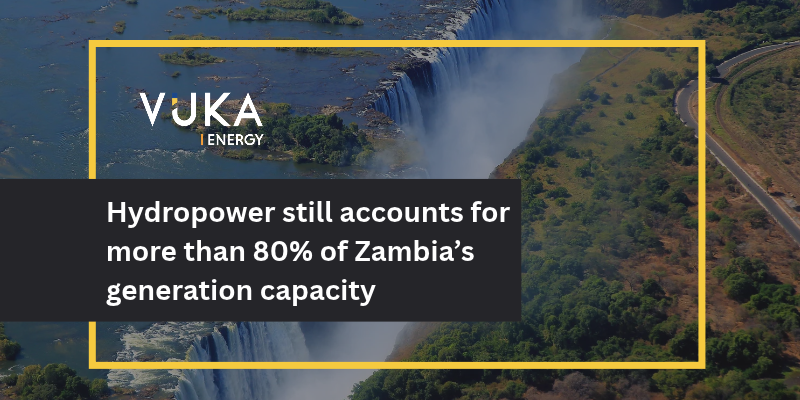
For generations, Zambia relied on vast hydroelectric installations, principally along the Zambezi and Kafue rivers, for over 80% of its total generation capacity.
But severe rainfall deficits repeatedly pushed reservoir levels at key sites like Kariba Dam to historic lows, causing extended daily blackouts that crippled small businesses and constrained industrial output.
Now, a structural shift is underway as public officials, private investors, and international power developers adapt to a new regulatory landscape.
LIST YOUR COMPANY on our supplier directory
The legal cornerstone of the market overhaul stems from the Electricity Act and Energy Regulation Act, which designated the Energy Regulation Board (ERB) to oversee an increasingly complex market.
The turning point came with the formalisation of the Electricity (Open Access) Regulations, which effectively ended the state utility ZESCO’s historic role as the sole buyer and seller of power.
Under the new rules:
Independent Power Producers (IPPs) can bypass state intermediaries and negotiate direct power purchase agreements with mining firms and commercial operations.
Private generators gain non-discriminatory access to transmit power across ZESCO-owned transmission lines for an established wheeling fee regulated by the ERB.
State utility ZESCO is steadily shifting toward a regulated network service provider, managing system stability and infrastructure maintenance rather than controlling all commercial supply.
Complementing this, the Ministry of Energy has launched a competitive procurement framework designed to streamline approvals and offer targeted tax and financial incentives for private developers investing in utility-scale solar PV and battery storage systems.
As grid capacity slowly expands, industry data highlights a clear divergence in who is benefiting most from the sector’s initial rebound.
According to Energy News Network The mining sector, is for about half of Zambia’s total electricity consumption, has led the recovery.
Mining enterprises have utilised open-access regulations to procure off-grid and direct bilateral power supplies, supporting national plans to boost copper production.
By contrast, small enterprises, agriculture, and urban households have experienced a slower turnaround.
According to survey data from Afrobarometer, while nearly four in five citizens support opening the market to private power providers, nearly half of surveyed households have resorted to off-grid solar kits and rooftop systems to protect themselves from ongoing load shedding.
Industry experts stress that legal reforms alone cannot guarantee energy security without majorur physical upgrades to the national transmission network.
Primary challenges confronting regulators and power providers include:
Establishing wheeling tariffs that generate sufficient revenue for ZESCO to maintain line infrastructure without pricing private IPPs out of the market.
Setting up an Independent System Operator (ISO) to ensure grid scheduling and dispatch remain strictly neutral between ZESCO’s power plants and independent projects.
Constructing high-voltage transmission lines to carry solar power from sunny southern provinces to heavy industrial zones in the northern Copperbelt.
With over 800 MW of solar capacity integrated or currently under development alongside hybrid battery storage projects, Zambia’s energy framework is undergoing its most significant test.
The ultimate outcome will depend on whether new private generation can scale rapidly enough to meet soaring industrial demand while ensuring affordable electricity for millions of everyday households.
READ NEXT: Africa’s Water security challenge – why collaboration is the missing link
 Contact Us
VUKA is the trusted media partner to key professionals, policy makers, suppliers and
manufacturers. We provide unparalleled opportunities for industry-wide connection.
