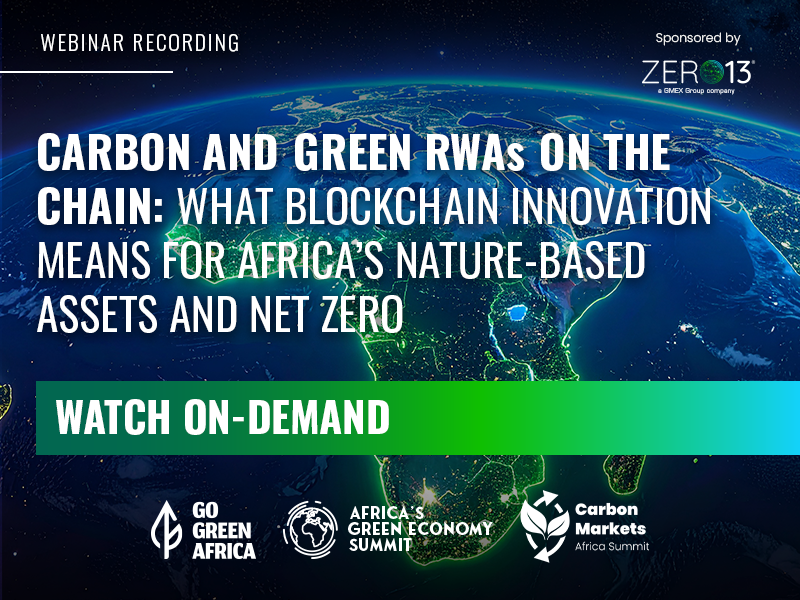
Our On Chain Impact webinar, held on 28 January – hosted by the Green Economy Hub at Vuka Group and sponsored by GMEX Group and ZERO13 – delivered a strong, practical discussion on how blockchain can unlock Africa’s carbon, biodiversity and green real-world assets at scale. The session brought together leading voices to cut through the noise and focus on what actually matters. building trust, reducing friction, and making nature-based assets investable. You can now watch the full conversation on demand below.
The webinar unpacked how blockchain infrastructure can professionalise Africa’s carbon, biodiversity and green real-world assets by bringing transparency, traceability and investor grade confidence to nature-based markets. Speakers highlighted that on chain verification, digital MRV and tokenisation are not about speculation, but about fixing trust gaps, reducing friction and unlocking institutional capital at scale. The message was clear: Africa can move from project storytelling to balance sheet ready assets if the rails are built right.
“Blockchain is not about crypto hype. It is about creating trust where markets have historically struggled to scale.”
Blockchain Is Infrastructure, Not the Asset
Blockchain’s real value lies in enabling trust, transparency, and efficiency across carbon and green markets. It is not the asset being sold, but the rails that allow real world assets to be verified, tracked, and traded with confidence. When positioned correctly, it removes friction rather than adding complexity.
Trusted Data Is the New Currency
High quality, verifiable data underpins investable nature-based assets. Digital MRV systems, combined with immutable records, can close credibility gaps that have historically limited scale. Without trusted data, tokenisation has no foundation and investor confidence stalls.
Lower Friction Unlocks Scale
On chain settlement and automated verification can materially reduce transaction costs, delays and counterparty risk. This creates faster deal cycles and improves liquidity, making carbon and biodiversity markets more accessible to a broader pool of buyers and financiers.
Africa Has a First Mover Advantage
Africa can design green digital markets that reflect local realities rather than importing imperfect models. With the right frameworks, the continent can lead in structuring credible nature-based assets that are globally relevant but locally grounded.
Institutional Capital Sets the Bar
Large scale capital will only engage where governance, compliance, custody and reporting meet institutional standards. Blockchain solutions must therefore be built with regulators and asset owners in mind, not retail speculation. Meeting these requirements is the gateway to a serious scale.
Question: What is the single biggest barrier to scaling trusted carbon & green RWA markets in Africa today?
Top Answer: Limited access to finance and market demand (most votes)

Africa's Green Economy Summit connects industry professionals and organisations to information and each other in a carefully curated live environment. Its purpose is to support in mobilising investments for green projects to scale up and industrialisation, which will have a significant impact on environmental sustainability and economic growth.


.webp)

.webp)
.webp)
.webp)
