
The Environmental, Social, and Governance (ESG) strategy has shifted from a corporate side note to a central pillar of logistics transformation. With 94% of supply chain leaders now viewing sustainability as a competitive advantage, the industry is no longer asking whether to go green; it’s asking how fast.
At Converge Africa 2026, sessions like “Designing Resilient Supply Chains” and “The Shopper of 2030” reflect this shift. Sustainability is no longer just about compliance; it’s about customer loyalty, investor confidence, and operational resilience.
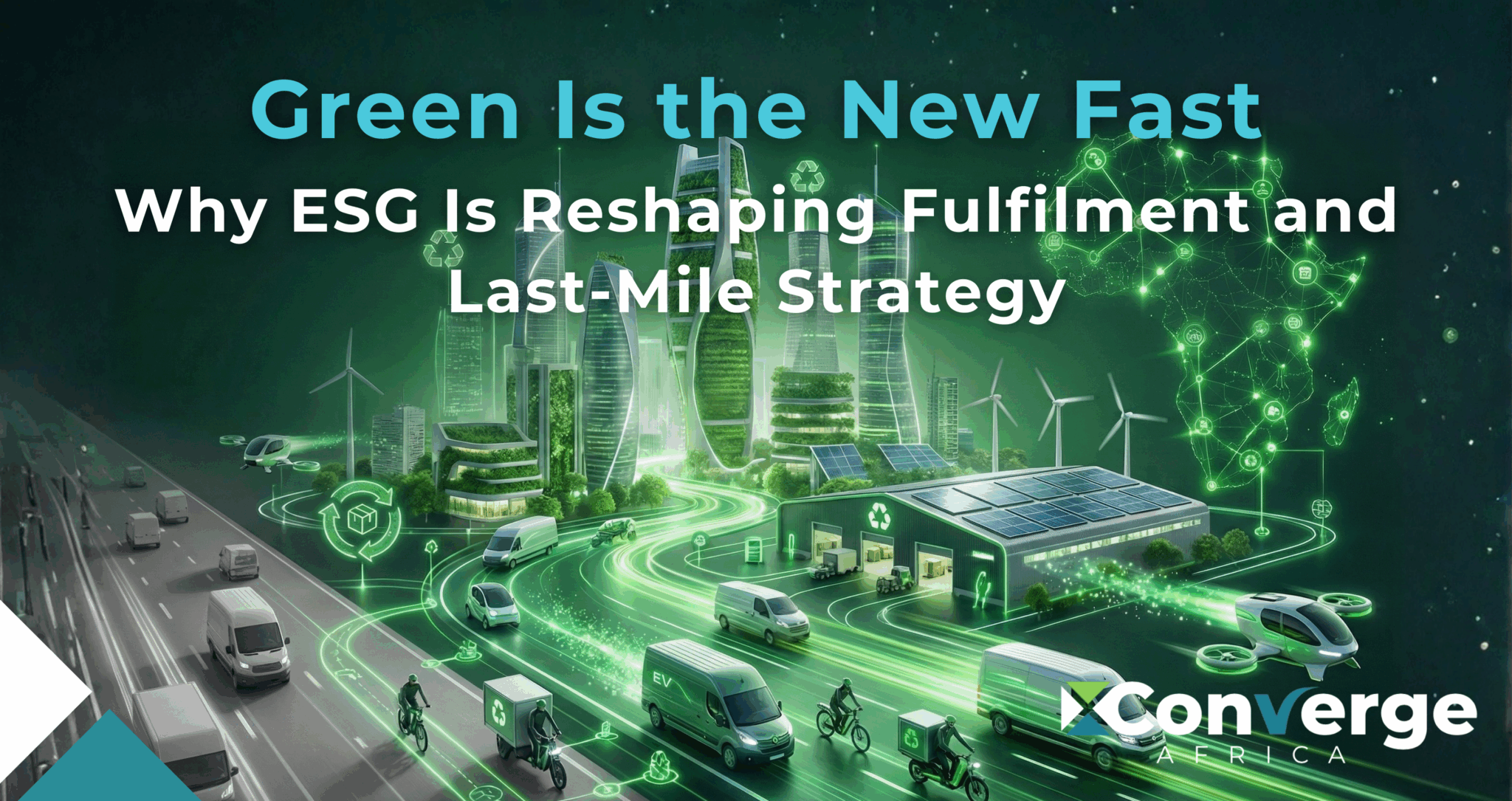
Green logistics is no longer a niche initiative; it’s a strategic imperative. Companies are investing in electric vehicles (EVs), sustainable fuels, and AI-powered route optimisation to reduce emissions and fuel costs. DHL’s GoGreen programme, with over 39,000 EVs and a full suite of emission-reduced shipping products, sets the benchmark for what’s possible.
This isn’t just good for the planet, it’s good for business. Companies that integrate ESG into their operations report profit margins 1–3% higher and stock market premiums of over 10%.
Sustainable infrastructure is becoming a core differentiator. Warehouses and fulfilment centres are being redesigned for energy efficiency, powered by renewables and built to support circular supply chains. These facilities are no longer just storage spaces, they’re strategic assets that reflect a brand’s values.
At Converge Africa 2026, the “Warehouse of the Future” and “PPP in Practice” sessions explore how infrastructure can be both smart and sustainable, serving speed, scale, and ESG goals simultaneously.
Reverse logistics is being reimagined as a driver of value, not just a cost centre. Returned products are now seen as assets, ready for refurbishment, resale, or recycling. The global reverse logistics market, valued at $768.6 billion in 2023, is growing steadily as companies embrace circular supply chain models.
DHL’s integrated services for device returns and end-of-life recycling show how logistics can support both sustainability and profitability. At Converge Africa 2026, the “Campaign Hackathon” and “The Hidden Customer” sessions highlight how circularity can unlock new revenue streams and deepen customer trust.
Fulfilment and last-mile logistics are no longer measured by speed alone. Today, they’re judged by impact, on the environment, on communities, and on long-term brand equity.
The leaders of tomorrow will be those who treat ESG not as a checkbox, but as a compass. They will build green fleets, sustainable infrastructure, and circular supply chains that deliver more than parcels; they deliver purpose.
In the race for logistics leadership, the most powerful differentiator may not be how fast you move, but how responsibly.
Converge Africa is a part of a series of retail events unlike any other. It's the new unifying brand for the digital commerce value chain. Formerly ECOM Africa.
Converge Africa Conference & Expo
For enquiries contact:
T: +27 21 700 3500
T: +27 21 700 3579


.webp)

.webp)
.webp)
.webp)
