
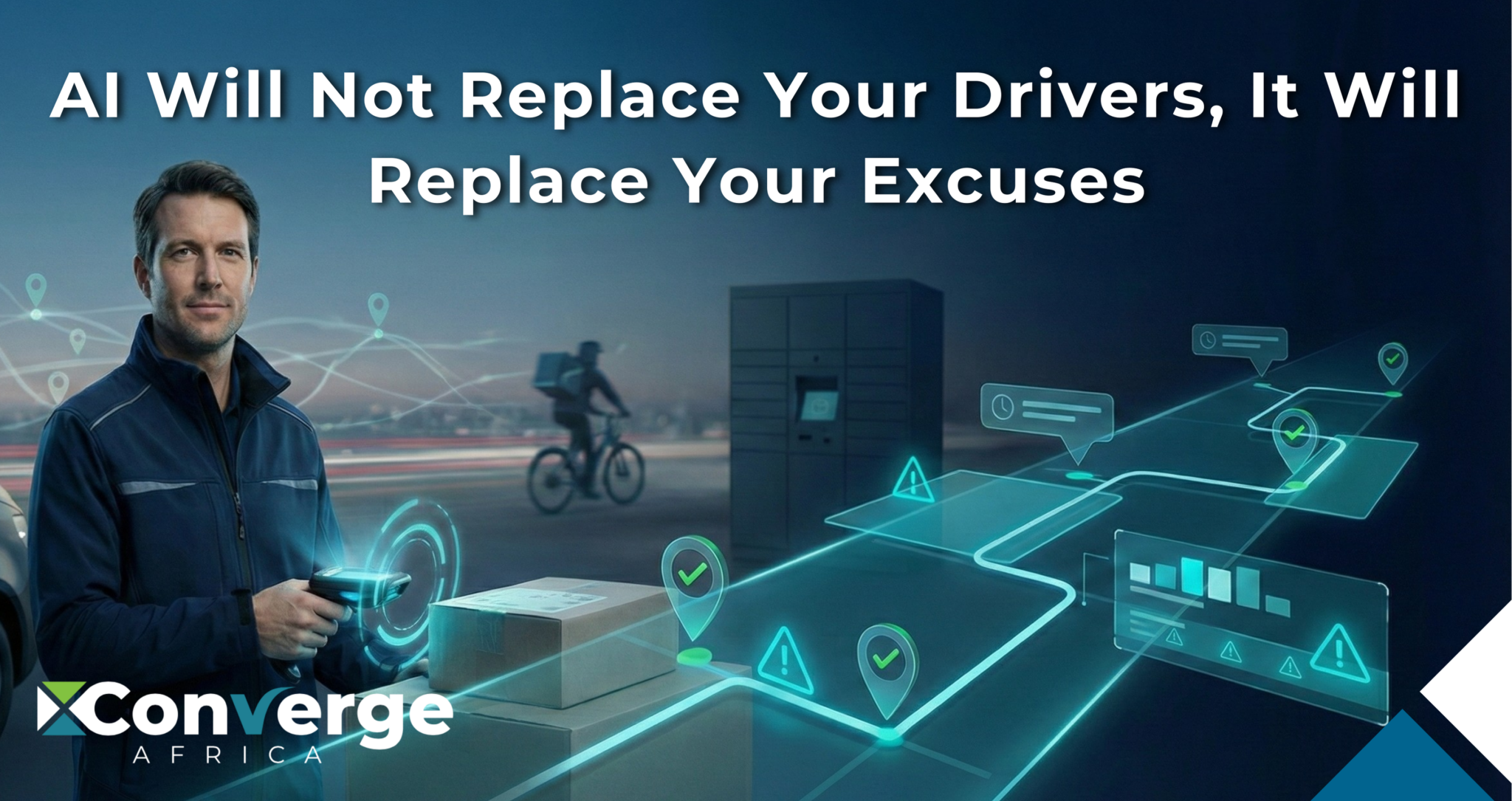
The AI conversation in logistics often oscillates between hype and fear, either AI will fix everything, or AI will remove jobs. Both miss the point. AI’s real effect is less dramatic and more consequential, it exposes inefficiency. It replaces “we could not know” with “we chose not to measure”, and in doing so, it forces a new level of accountability in last mile operations.
AI in logistics is best understood as an uncertainty reduction engine. Last mile is messy because it is full of variables, traffic, weather, customer behaviour, address friction, and volatile demand. Traditional planning assumes stable patterns. AI thrives on instability because it learns from patterns and updates decisions in real time. When you reframe AI as uncertainty reduction, you stop treating it as magic and start treating it as infrastructure for better decisions.
The hot topic is moving from experimentation to operational deployment, route optimisation, dynamic ETA prediction, courier workload balancing, and exception management. Peer-reviewed research increasingly supports the practical value of AI in last-mile delivery, emphasising real-time fleet optimisation, improved sustainability outcomes, and better customer satisfaction by adapting to changing conditions. Meanwhile, industry commentary keeps returning to the same enabling tactics, micro-fulfilment, crowdsourcing, e-bikes, lockers, all of which become more effective when AI coordinates them. The shift is not AI replacing logistics, it is AI making logistics less forgiving of sloppy process.
The most common mistake is trying to “add AI” without fixing data discipline. Bad addresses, inaccurate inventory, inconsistent scanning, and fragmented carrier systems produce messy inputs, and messy inputs produce disappointing AI outputs. Another mistake is expecting AI to remove the need for human judgement. AI is powerful at pattern recognition and optimisation, but humans still define the promise, the policy, and the exceptions that matter most. Without governance, AI can optimise the wrong thing, such as speed at the expense of cost, or cost at the expense of customer experience.
The narrative should shift from “AI as automation” to “AI as decision quality”. The lobbyist argument is that logistics leaders should stop viewing optimisation as optional. In a world where customer expectations rise and margins remain under pressure, decision quality becomes a competitive advantage. AI does not need to be perfect to be valuable, it needs to be better than the slow, manual, and reactive decisions that dominate many last mile operations. Properly governed AI makes networks calmer, because they stop relying on heroics and start relying on predictive control.
Build a clean data foundation, consistent scanning events, accurate inventory, verified addresses or location pins, and unified visibility across carriers. Then deploy AI where it matters most, route optimisation, dynamic ETA, capacity forecasting, and exception triage. Train teams to work with AI outputs, not to worship them. The end goal is not futuristic theatre, it is an organisation that can make good decisions at speed, which is what customers actually experience as reliability.
Converge Africa is a part of a series of retail events unlike any other. It's the new unifying brand for the digital commerce value chain. Formerly ECOM Africa.
Converge Africa Conference & Expo
For enquiries contact:
T: +27 21 700 3500
T: +27 21 700 3579


.webp)

.webp)
.webp)
.webp)
