
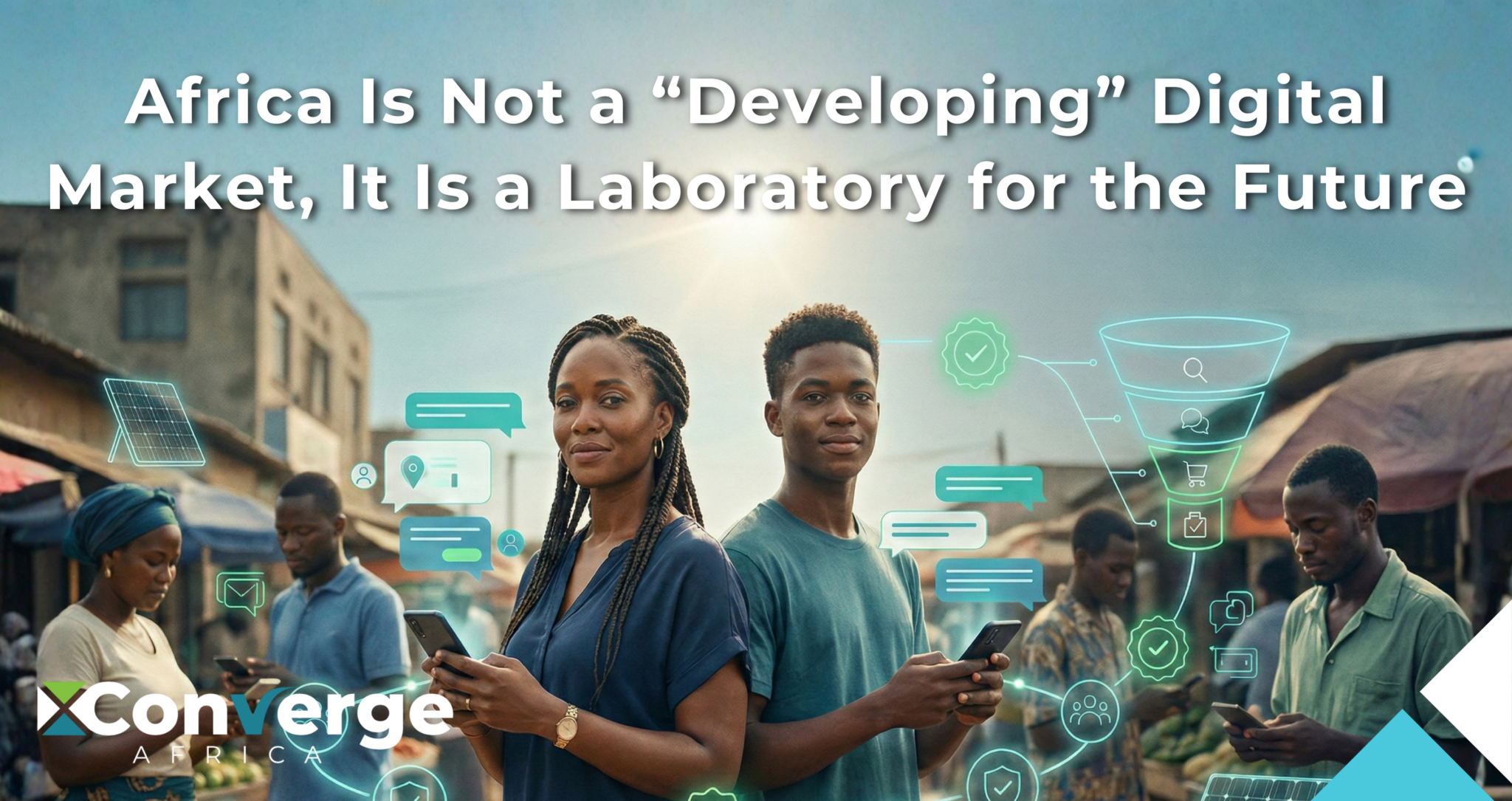
The most patronising and strategically dangerous myth is that Africa is behind and therefore must copy the digital marketing playbooks of Europe and North America. This view is not only simplistic but also costly. Africa is not merely developing, it is innovating under constraints, and constraints often produce the best design.
The myth persists because benchmarks and case studies are often Western, because big platforms report growth in ways that frame Africa as a later adopter, and because some decision makers confuse lower penetration with lower sophistication. They see fewer connected users and assume less opportunity, ignoring the rate of growth and the mobile first behaviours that are reshaping digital engagement.
When organisations treat Africa as a late adopter, they underinvest, they delay market entry, and they fail to build local capability. They also import heavy, desktop era experiences that do not fit mobile first realities, which leads to poor conversion and misplaced blame. Worst of all, they miss the chance to learn a playbook that increasingly applies globally, lighter journeys, chat-based commerce, community driven trust, and content designed for mobile distribution.
Africa is a laboratory for the future of marketing. It forces brands to design for mobile, to build trust explicitly, to simplify journeys, and to integrate marketing with operations. Those disciplines are exactly what the privacy first, attention scarce world is demanding everywhere. The brands that learn this now will not only win in Africa, they will upgrade their global capability.
Africa’s connectivity is still growing, which means the market expands by adding new users, not merely by shifting share among incumbents. Mobile dominates access, which shapes the entire funnel, discovery, consideration, and conversion happen in feeds, apps, and chats. Trust and fulfilment are decisive, which forces marketing to align with customer experience. These are not disadvantages, they are training grounds for modern marketing maturity.
First, leadership must invest in local insight and local creative. Cultural translation matters more than global templates. Second, build mobile first experiences and conversational support, including messaging-based journeys. Third, treat trust and reliability as marketing assets, measure service responsiveness and fulfilment consistency as part of marketing performance. Fourth, partner with creators as cultural interfaces, not as media slots.
Some will say, “Infrastructure makes it too hard.” Infrastructure makes it clarifying, it forces the discipline that many mature markets avoid. Others will say, “Our audience is too diverse.” Diversity is not a barrier, it is an argument for localisation and segment specific storytelling. Others will say, “The budgets are small.” Budgets grow where results are built, and early investment builds the capability to capture that growth.
Change the way your organisation talks about Africa. Stop framing it as a future market, treat it as a present advantage. Invest in mobile first capability, build trust systems, partner locally, and use the continent as a source of innovation, not a destination for recycled strategy.
Converge Africa is a part of a series of retail events unlike any other. It's the new unifying brand for the digital commerce value chain. Formerly ECOM Africa.
Converge Africa Conference & Expo
For enquiries contact:
T: +27 21 700 3500
T: +27 21 700 3579


.webp)

.webp)
.webp)
.webp)
