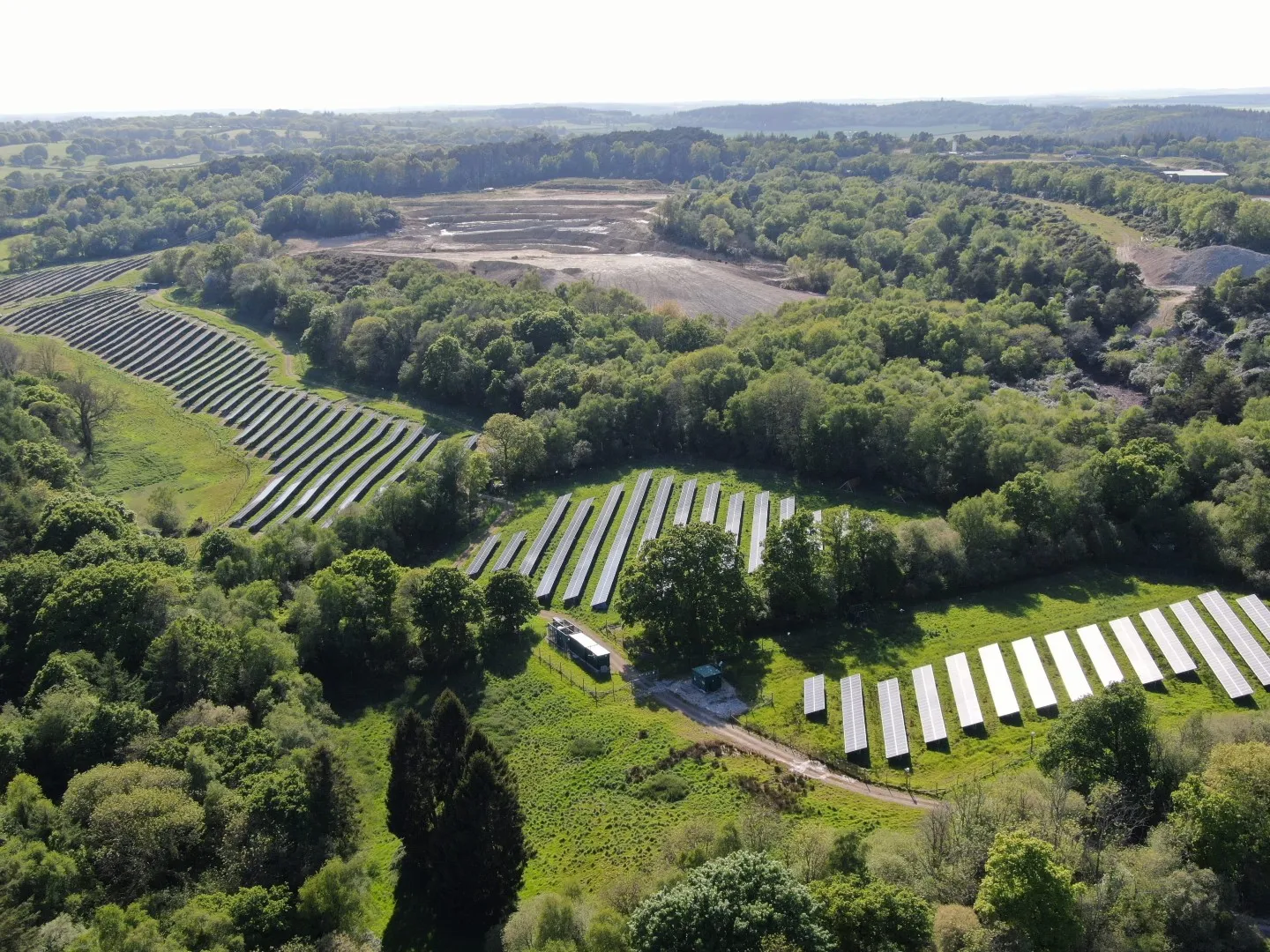
Global energy demand grew by 1.3% in 2025, slowing from 2% in 2024. At the same time, solar PV became the largest single source of global energy supply for the first time, meeting more than 25% of the world’s electricity demand, followed by natural gas, which accounted for 17%.
This was the first time on record that a renewable energy source contributed the largest share of growth in global energy demand.
The 600TWh increase in solar PV was the largest-ever increase in electricity generation from a single source in one year (outside the post-COVID-19 recovery period). This rise in solar PV met ~70% of electricity generation growth.
The IEA says renewables “now virtually match total global generation from coal”.
“Low-emissions sources combined – solar, wind, nuclear, hydropower and other renewables – contributed nearly 60% of the growth in global demand,” said the IEA in its Global Energy Review 2026.
“Global renewable generation increased by around 8.5% year-on-year in 2025, slightly slower than the 9.6% rise observed in 2024 but much faster than the around 6% average of the previous decade.
“This was despite declines in hydropower output in Europe and Eurasia and lower-than-normal wind speeds, particularly in Europe, which tempered growth.
“Solar PV saw its largest-ever increase in generation, rising by about 600TWh. About 55% took place in China, but growth was otherwise broad-based geographically,” the IEA explained.
Global electricity demand in 2025 grew at around 2.3 times the rate of total energy demand.
The broad-based drivers of this electricity demand include:
though they account for slim shares of total electricity demand as household appliances and commercial buildings (excluding data centres) still provide the bulk of demand growth.
In advanced economies, electricity demand expanded by 1.6% year-on-year, with around 50% of total electricity demand growth in the US coming from data centres, aside from residential, industry and transport sectors. This aligns with the IEA’s Energy and AI report findings.
The increase in renewables and nuclear generation in 2025 exceeded the total growth in electricity supply. “In the European Union, the share of solar PV and wind reached 30% in 2025, surpassing that of fossil fuels for the first time.”
In 2025, electricity generation from natural gas and nuclear continued to grow globally.
Solar PV saw a record increase of 600TWh, taking its total electricity generation to almost 2,700TWh. This is more than double its output in 2022. This takes solar PV’s share of total global electricity generation to more than 8%.
This is the largest ever observed absolute increase for any energy source, excluding years marked by rebounds from global economic shocks such as COVID-19.
While China did see huge increases in its solar PV generation, the growth is a more global story. The US, India and the Middle East all saw increases of 20% or more.
On the other hand, this strong growth in solar PV led to a decline in global electricity generation from coal for the first time since 2019 (excluding the COVID-19 shock in 2020).
Again, China led the way, with coal generation falling by ~1.5%, while India experienced a 3% drop, and coal power fell below 10% of total generation for the first time in the EU.
Still, “fossil fuels continued to contribute more than half of global electricity generation, with coal remaining the largest single source.”
Construction started on more than 12 GW of nuclear power capacity in 2025, as nuclear power generation expanded by around 1.2% compared with 2024 figures. This was thanks to a reactor restarting in Japan, strong performance from plants in France and new units beginning operations in several countries.
New units included 3GW cumulatively from new reactors in China, India and Russia. This was offset by 3GW of nuclear capability retiring in Belgium. This keeps global nuclear capacity at 420GW, with reactors active in more than 30 countries.
Nuclear reactors with a combined capacity of 78GW are currently under construction in 15 countries. Half of this global capacity under construction is in China, with “total installed capacity in the country expected to reach 100GW by around 2030”.
Nine new nuclear construction sites got underway in China, and one in Russia. Egypt, India and Türkiye each have around 5GW under construction. Japan, Korea and the UK each have two reactors under construction, while Slovakia has one; their combined capacity is 9.5GW.
“Japan continues to restart reactors whose operations had been suspended.”
While most of the nuclear reactors currently under construction are large-scale (most with capacity larger than 1GW), China’s land-based small modular reactor (SMR) and Russia’s floating one will soon have some new friends as additional SMRS are “likely to begin construction in the near term in Canada, Korea, the United Kingdom and the United States.”
Find out more in the IEA’s Global Energy Review 2026
 Contact Us
VUKA is the trusted media partner to key professionals, policy makers, suppliers and
manufacturers. We provide unparalleled opportunities for industry-wide connection.