One year after launching an industry task force on energy and infrastructure skills development, speakers at Enlit Africa reported progress and outlined the next phase of an effort to build the workforce needed for Africa’s energy transition.
The session showed that while technical skills shortages remain a challenge across the energy and water sectors, collaboration between industry, financial institutions, training providers and government is delivering results.
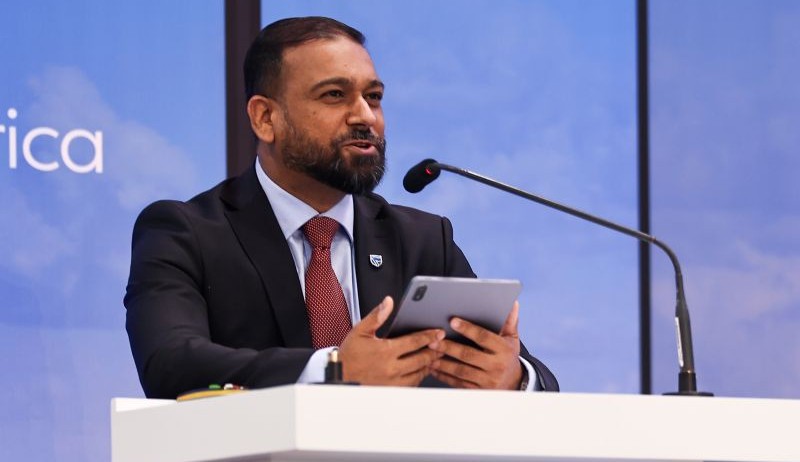
Moderator Deerosh Maharaj, executive head for energy, infrastructure and mining at Standard Bank, said last year’s discussion had become an active industry initiative.
“We had a call to action,” he said, explaining that the task force was set up to move beyond discussion and translate ideas into interventions.
He described the initiative as a long-term commitment rather than a conference discussion.
“It doesn’t matter where work like this is placed, it’s actually the purpose and the intention behind it that will determine what the outcomes are.”
Dr Rethabile Melamu, CEO of the South African Photovoltaic Industry Association (SAPVIA), said the group focused on initiatives able to deliver systemic change, not quick fixes.
“The first consideration was to identify initiatives that are systemic in nature and would potentially have a long-lasting impact,” she said.
The task force agreed not to duplicate programmes but to strengthen and scale those already producing results.
READ NEXT: How South Africa’s electricity market reforms will change electricity prices
One of the task force’s first achievements was expanding training for electricians entering solar. Many qualified electricians lacked solar installation skills, so industry partners funded training in solar system design and installation.
Since the 2025 Enlit Africa edition, the programme has upskilled more than 100 electricians.
More than 50 participants have been placed in industry, with one company permanently employing 12 of the 15 learners it hosted after the programme.
Another major initiative was the Power Up platform, developed to connect higher education institutions with employers.
The platform connects TVET colleges, universities, universities of technology and industry to align education with workforce needs.
Its objectives include identifying skills gaps, coordinating training, pooling funding and increasing graduate workplace placements.
Dr Melamu noted that many companies seek experienced workers while graduates struggle to gain experience.
“Where are they going to get experience if companies do not give them an opportunity to learn on the job?”
The task force outlined the need for a skills master plan for the energy value chain. Instead of focusing only on labour shortages, speakers argued that workforce planning should start earlier.
“If we want to build a resilient economy in the next 50 years, we need to start equipping the five-year-olds,” Dr Melamu said.
She stressed that planning should identify both the skills required and the scale of demand.
“Let’s think long term. Let’s think systemic change.”
The discussion explored how sustainability is becoming an essential workforce skill.
Sheena Ramsamy said the sustainability agenda affects every industry, beyond energy. She cited limited electricity access and increasing water scarcity, then stressed the need to build sustainability awareness from an early age.
“The future that we’re working towards can come way quicker.”
She also introduced the Sustainability Academy, a free digital learning platform helping businesses understand sustainability practically. It covers renewable energy, water management, carbon markets and environmental, social and governance (ESG) principles.
Since launching in August, more than 4,000 users have completed training.
“We feel that knowledge should not be attached to a cost.”
The panel discussed how artificial intelligence will reshape labour markets.
Drawing on offshore energy experience, Stacey-Lee Bolon said that while AI is changing knowledge work, many technical occupations will still need skilled people.
“The reality of the physical workforce is that AI is not going to give that shake-up to the physical workforce.”
She encouraged stronger technical and vocational education alongside STEM, instead of focusing only on university pathways.
The discussion highlighted workforce data, digital systems and verified skills records for recruitment, planning and localisation.
Khetsiwe Dlamini from the Energy and Water Sector Education and Training Authority (EWSETA) stressed collaboration between government, training providers and industry.
Although skills development is part of EWSETA’s mandate, success depends on employers offering workplace experience.
The organisation has introduced support such as funding for medical assessments and personal protective equipment to lower learner-hosting costs.
The Power Up platform was highlighted as a way to strengthen communication between employers and education institutions by matching graduates with opportunities.
Delegate questions raised regional cooperation. A representative from Eswatini asked whether South Africa’s solar installer accreditation initiatives could align with neighbouring countries.
Dr Melamu said collaboration with industry associations across Africa is under way and encouraged more regional cooperation.
She suggested that Africa should prepare to supply skilled workers globally.
“The world is going to need our skills and our young people.”
Speakers closed by stressing that solving Africa’s skills challenge requires collaboration between government, industry, education providers and financial institutions.
The task force is not seeking standalone programmes but an ecosystem that can produce the skilled workforce needed in South Africa and the wider continent.
Maharaj said the invitation is open for sector organisations to contribute and shape the next phase.
ALSO READ: Africa’s data centre problem isn’t capital, it’s bankability – here’s why

 Contact Us
VUKA is the trusted media partner to key professionals, policy makers, suppliers and
manufacturers. We provide unparalleled opportunities for industry-wide connection.