
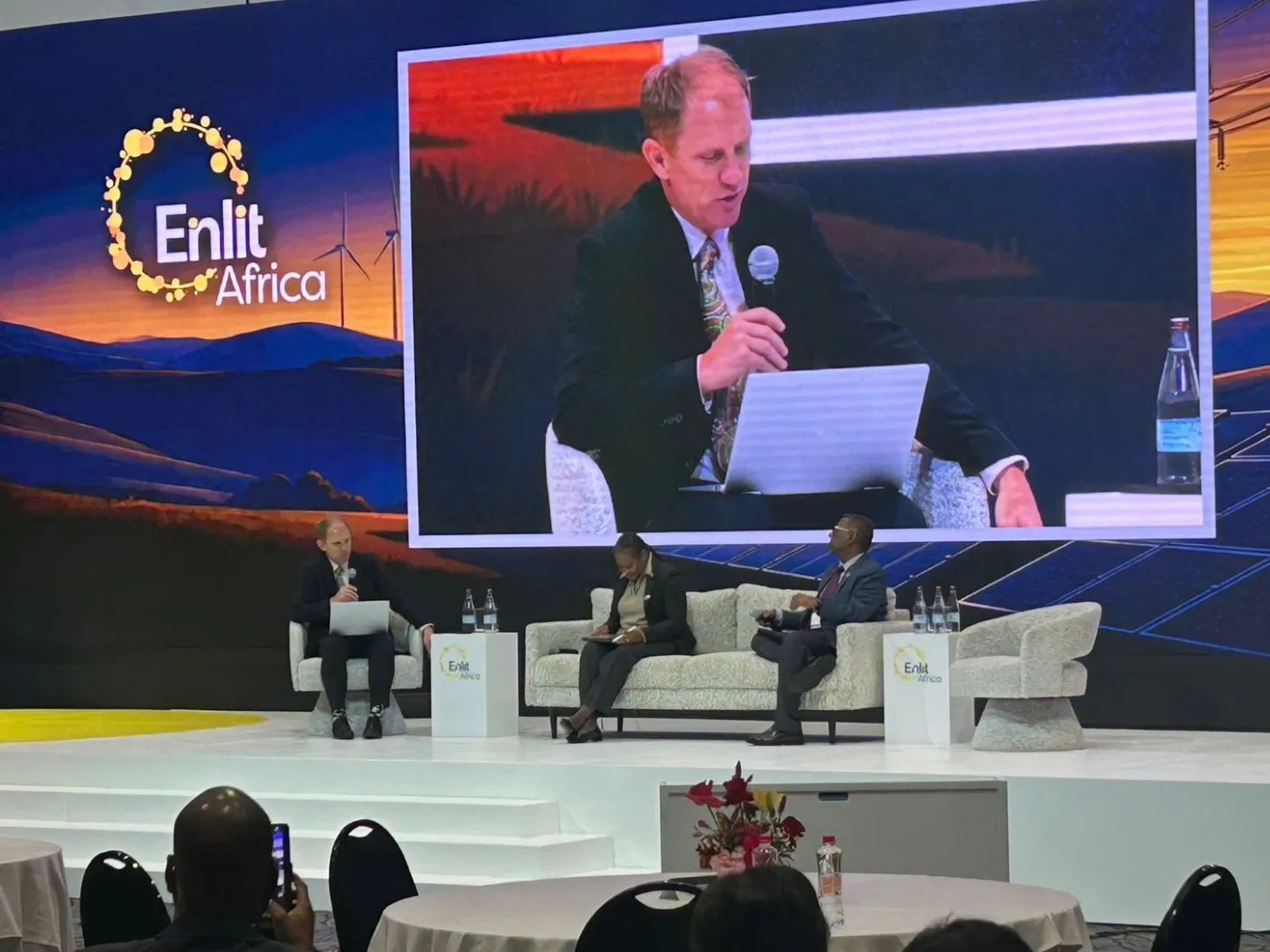
While energy generation has improved remarkably in South Africa, with more than 365 days without loadshedding, what still needs to be sorted is the issue of trust.
This was the consensus of a panel at Enlit Africa discussing the country’’s current energy situation, made up of Eskom’s Group Executive for Strategy and Sustainability Nontokozo Hadebe, acting Director-General of the Department of Electricity and Energy Subesh Pillay, and moderated by CEO of the Energy Council of South Africa James Mackay.
“While we are concerned about a lot of negative coverage in the media, we also accept that we need to rebuild trust and confidence, especially at this critical time in the reform.
“But as we were rebuilding we also realised that the simplest way to rebuild trust with communities would be to commit to doing what we are supposed to be doing,” said Hadebe.

She added that another important element was to regain trust with Eskom’s employees themselves. “We had to do good by our people who also had been affected by the problem of the backlash because of loadshedding.
“As leadership, if we noticed that somebody was not motivated to work, we would approach them and find out from them how they thought we could do things differently to make things better for them.”
She also said staff being honest about the challenges facing the organisation helped with focusing everybody’s attention to the job at hand. “We have had to be clear about the challenges we had to face head on, especially when it came to debt and the provision of ongoing electricity.
“This improved commitment levels and ensured that staff became dedicated. And we hope to harness this positive energy towards dealing with another big challenge we are facing, that of load reduction.
“Communities are calling on us to solve this problem. We are engaging them through honest and transparent communication to bring them up to speed on how we are sorting out the problem.”
Pillay said a lot of work had been done to also improve Eskom’s financial performance, which has led to there being trust and confidence in the utility’s financial performance.
“The credit ratings have been improving. We have also been improving our billing system which has boosted our revenue collection. This has led to increased interest in the number of partners in the financial space who have shown interest in energy and moving it forward.
Now that the discussions on the economic front are bearing fruit, we can turn our attention onto the full readiness of the organisation.” He added that, because the energy system is complex with many moving parts, integration and sequencing become very important.

“While even in normal circumstances the electricity system is complicated, it’s worse when that system is now even more complicated because of the fundamental nature of reports.
“You also have to manage supply to ensure that you can deal with immediate demand especially in peak times. There needs to be a central point of coordination, because of the many activities happening at the same time, to initiate a specific outcome.
“You need to ensure that, firstly, the sequencing is correct and, secondly, that there is the ability to intervene in the system when there is a problem so that you can either resolve it or escalate.”
He said the Department of Electricity and Energy is playing a hand in ensuring that this happens. “We take a lot of time to work on synergising this relationship between the department as a policy maker and implementer and coordinating with state entities.”
 Contact Us
VUKA is the trusted media partner to key professionals, policy makers, suppliers and
manufacturers. We provide unparalleled opportunities for industry-wide connection.
