
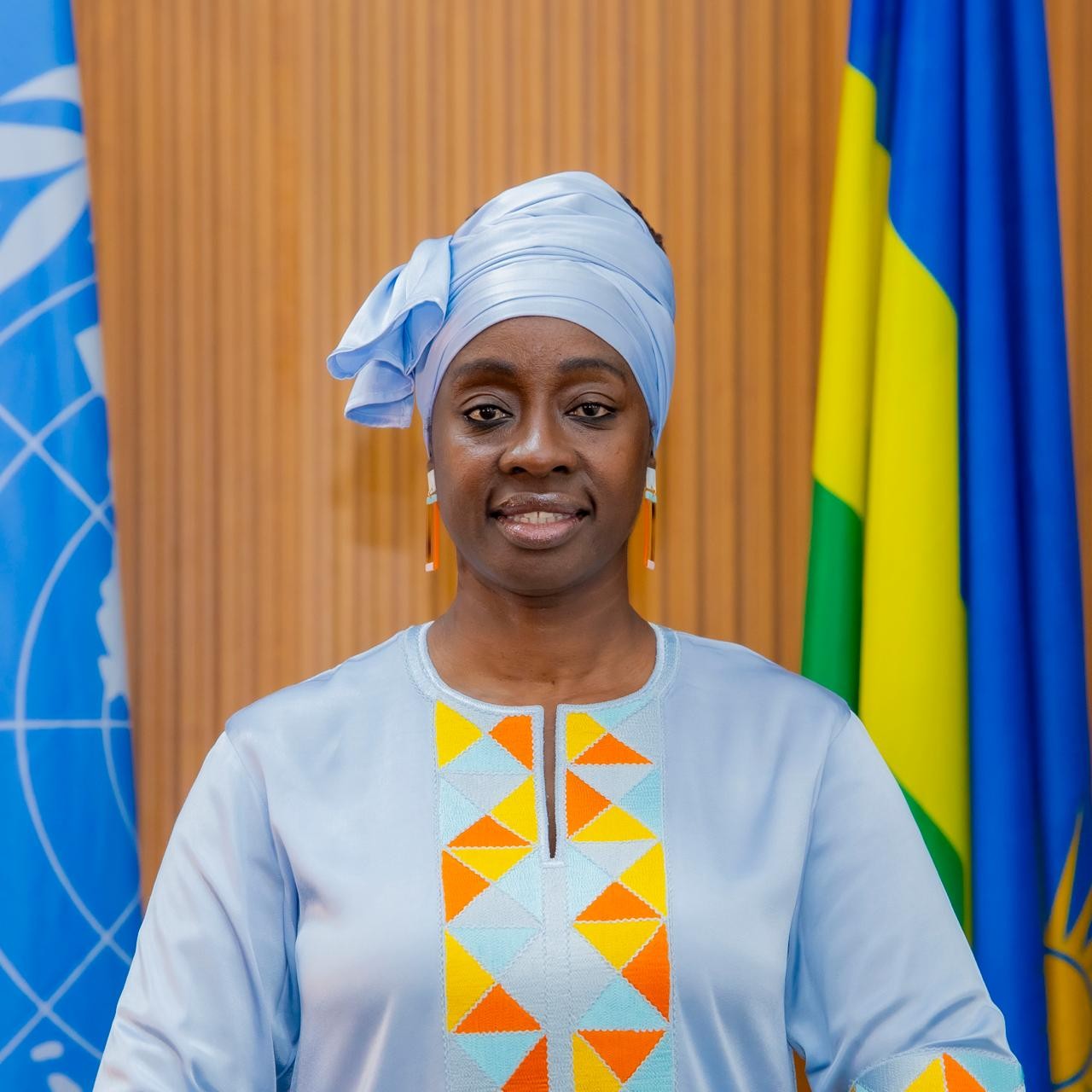
Dr Fatmata Lovetta Sesay, UNDP Resident Representative in Rwanda, emphasises Africa’s transition from observer to architect in carbon markets, harnessing vast natural capital and ensuring a just transition aligned with national development priorities.
Dr Sesay highlights the need to empower women and youth through strong regulatory frameworks, institutional capacity building and ownership of technologies, moving them from labourers to leaders. UNDP, as co‑host of the Carbon Markets Africa Summit, stresses that carbon markets must transform lives, preserve biodiversity and accelerate clean energy. Rwanda’s leadership, from banning single‑use plastics to establishing a national carbon market framework, makes it a fitting venue. The summit will showcase Africa’s readiness to unite, trade high‑quality credits and drive inclusive green development across the continent.
Thank you very much for this opportunity to be part of this discussion today. I am going to start by responding to the first question with a famous Rwandan proverb that says, “One tree does not make a forest.” I think this proverb resonates very well with the work we do at UNDP because sustainable development cannot happen in isolation. As the Resident Representative of UNDP in Rwanda, I work to ensure that we are a connector among government, development partners, the private sector, communities and the people of Rwanda.
As we often say in UNDP, we see our role as an integrator that brings all partners together. As part of our mission in Rwanda, we design and scale inclusive, green and resilient development pathways. What does this mean in practical terms? It means translating the country’s bold vision of becoming a green, climate-resilient and high-income nation into impactful daily realities, whether through our work on biodiversity finance or climate intelligence. It is about supporting the country’s clearly outlined vision and ensuring that our daily work helps the Government and people of Rwanda advance towards becoming a green, climate-resilient and high-income nation.

This is a very important question, and I would like to make three points about the role Africa can play in shaping the next phase of carbon markets. The first is recognizing that Africa is moving from being an observer to being an architect—from a passive participant to an active leader in high-integrity, high-impact carbon finance. That is really important. We now see ourselves, and all partners in carbon market discussions, as supporting efforts to shape the market, rather than only contributing to or receiving whatever carbon markets have to offer.
The second point is what I call the power of our canopy. What does Africa bring to the discourse on carbon markets? We bring vast natural capital, from carbon-sink forests to the continent’s immense renewable-energy potential, which we can offer to global markets. When we discuss carbon markets, we therefore see Africa as a supplier of the high-quality carbon credits the world needs. The continent will continue to play a key role in carbon markets.
My last point concerns the just transition. Africa will help ensure that we have a framework confirming that carbon finance is not just a commercial transaction. It is also critical to financing the national ambitions outlined in countries’ Nationally Determined Contributions, or NDCs.
For these three reasons, we believe the continent and its carbon-market stakeholders will be active players, not passive participants. We have the foundations needed to trade in carbon credits, including the immense potential I have described. Africa therefore comes to the table with something of great value. Finally, we must ensure that the conversation about carbon credits is not separated from countries’ national development needs, which are already reflected in their Nationally Determined Contributions. These are three critical ways in which Africa will help shape the next phase of carbon markets.
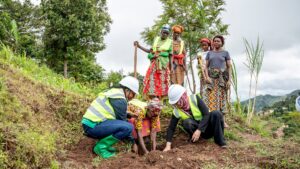
Women play an important role in the carbon markets discussion, but there are some basics we need to get right: what I call putting the foundation first. This brings to mind an African proverb that says, “A house cannot be built from the roof down.” We already know this. To empower women and youth, we need to establish a solid foundation for their active participation in carbon-market discussions and implementation.
Three things are important in doing this. The first is establishing national regulatory frameworks. We need transparent registries and Article 6-compliant baselines. Second, it is critical that we build the necessary institutional capacity. This includes building institutional capacity for precise carbon monitoring, reporting and verification, all of which are critical.
Third, and most importantly, we need the right local pipelines: high-quality, high-integrity projects that incorporate social co-benefits and ensure that women and youth benefit equitably. This is essential to empowering women to participate meaningfully in carbon markets and benefit from them.
A further important point is deliberate earmarking. Once the foundation is clearly established, inclusivity cannot be an afterthought. We need to advocate for structural earmarks, including a mandatory percentage of carbon-transaction revenues channelled into capital funds for women-led green enterprises and start-ups, as well as youth-led enterprises. Deliberately directing a percentage of carbon revenues to these enterprises is critical.
Another important point is ensuring that women and youth move from being seen as labourers to becoming leaders. We must deploy innovative models, such as community-governed trust funds, that enable youth cooperatives and rural women to own land rights and technologies.
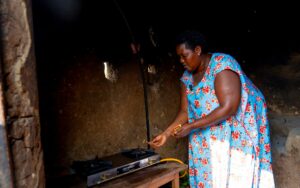
We see an example here in Rwanda, where biodigesters are being used to produce home biogas—clean energy for clean cooking. Women own these technologies and therefore have a decision-making role in the very tools and systems that generate carbon credits. When women and youth hold land rights or own the technologies, they come to the negotiating table with something tangible that increases their bargaining power, rather than remaining at the tail end of a trickle-down grant system.
The ownership rights of women are therefore important. We already know that in Africa, when we talk about women’s limited access to resources, we often underestimate what that access really means. Access does not simply mean being able to farm on land; it means holding the rights that allow you to make critical decisions about that land. In carbon markets and carbon-credit trading, enabling women and youth to own the relevant technologies means that they can come to the negotiating table and state how many carbon credits they have available. This is fundamental to empowering women and youth to participate meaningfully in carbon markets.
UNDP is an official co-host of the Carbon Markets Africa Summit for two main reasons. The first is that we believe carbon markets can be a powerful engine for development if they are well guided. In short, it is not only about the carbon markets themselves or the discourse around them; it is also about their catalytic impact on development more broadly.
The second—and most important—reason is also UNDP’s core message for the Carbon Markets Africa Summit, or CMAS: carbon markets must not only be about transactions in tonnes of carbon; they must be about transforming lives. This is what draws UNDP so clearly to this initiative. Our message is very clear.
We must establish high-integrity markets that deliver real development benefits to African communities. We must also ensure that carbon markets preserve our biodiversity and accelerate a clean-energy future. For these reasons, we believe that bringing people together at CMAS is important for development as a whole. It places development and the transformation of people’s lives at the centre of the carbon-markets discourse and will help us establish markets that truly work for people and for the development of nations.
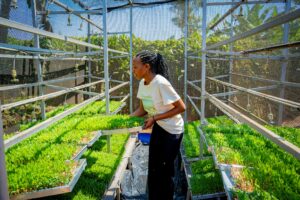
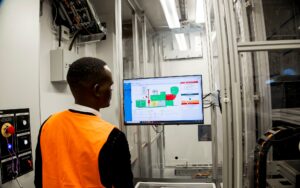
Carbon Markets Africa Summit is important for several reasons. First, I see it as a collective hub. We know that, historically, our communities have made major decisions when leaders gather around a single fire. The Carbon Markets Africa Summit, or CMAS, is that vital regional hub—a central gathering place where Africa comes together and its green vision is aligned and accelerated.
We also believe CMAS is a catalyst for action because it brings project developers, global buyers, sovereign states and civil society together under one roof. It is an opportunity to demystify the rules of Article 6 of the Paris Agreement and help address complex pricing challenges. Most importantly, through CMAS, we announce to global markets that Africa is united and ready for green business.
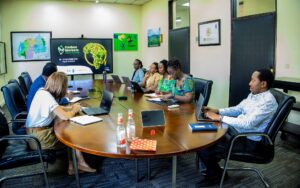
It is highly significant that this event is being held in Rwanda because Rwanda is already leading by example in the carbon-markets discussion. It is therefore highly symbolic and fitting that we host CMAS in a country that does not just write climate policies, but implements them—from its long-standing ban on single-use plastics to the National Carbon Market Framework recently approved by Cabinet. Rwanda is truly leading by example. Bringing practitioners, development actors and sovereign nations here allows them not only to discuss these issues, but also to see the practical results of sustained commitment and daily action on climate change, including Rwanda’s contribution to carbon markets. We therefore believe Rwanda is the right place for CMAS this year.
Having said that, I would like to send out a strong call for everyone to join us at the Carbon Markets Africa Summit, which will be held here in Rwanda from 13 to 15 October. Registration is open, and we truly hope you will register and join this important conversation on carbon markets. Come and let us demonstrate, here in Rwanda, how ready Africa is to showcase globally what we have: the power of our canopy, the value we bring to the table, and our commitment to developing a common approach to carbon markets and bringing high-quality carbon credits to market in support of national development across the continent. Thank you very much for this opportunity.
Africa's Green Economy Summit connects industry professionals and organisations to information and each other in a carefully curated live environment. Its purpose is to support in mobilising investments for green projects to scale up and industrialisation, which will have a significant impact on environmental sustainability and economic growth.


.webp)

.webp)
.webp)
.webp)
