
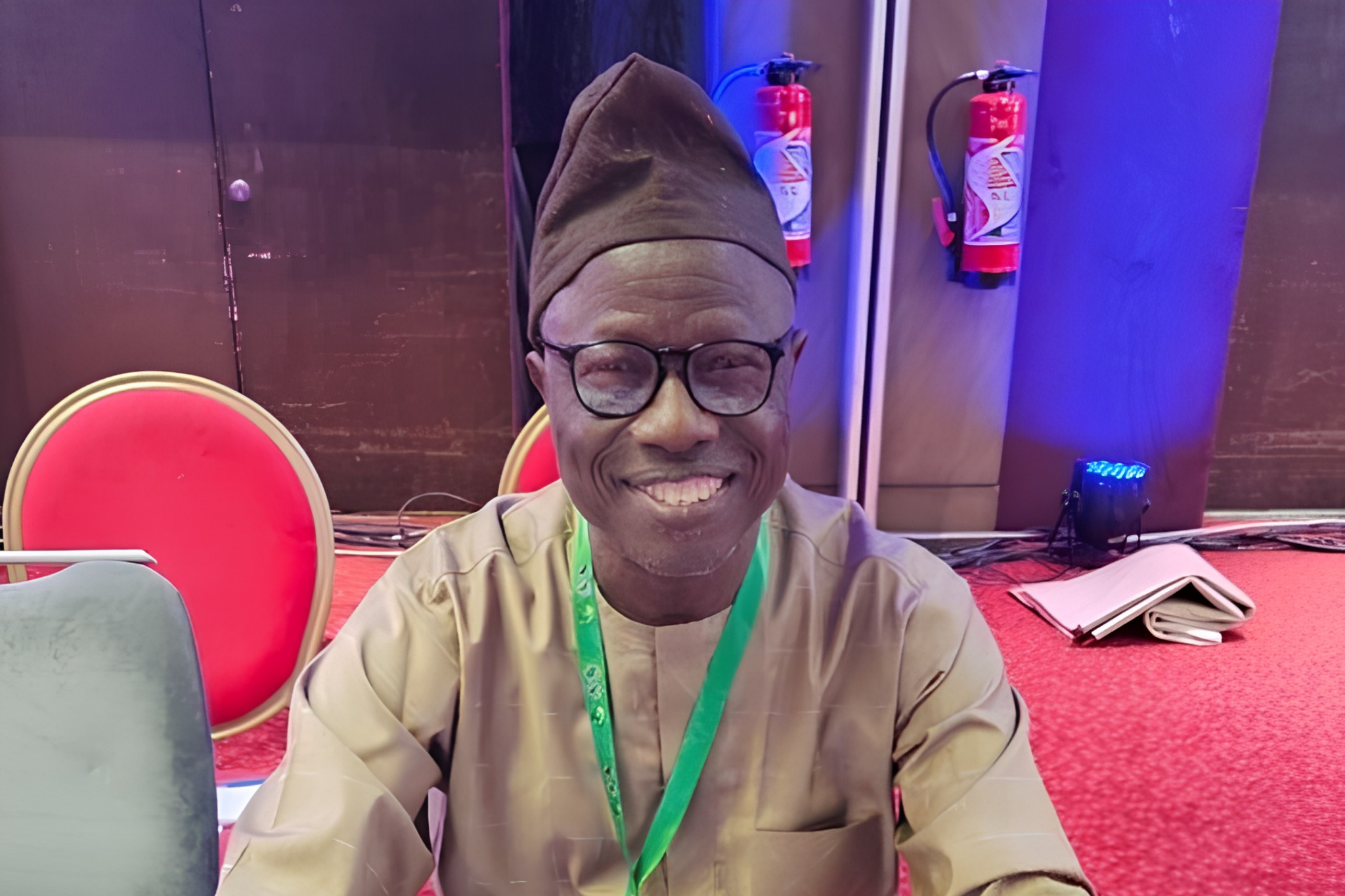
AMDC: “Quality data will encourage investment and industrialisation in Nigeria”
Exclusive interview with Tunde Muritala Arisekola, Senior Advisor, Geological and Mineral Information, African Minerals Development Centre (AMDC). At the upcoming Nigeria Mining Week in Abuja in October he is part of a session titled “Strategic Leadership in the Critical Minerals Race.”
Interview Summary
Mr Tunde Arisekola, a Nigerian geologist with 39 years of experience, outlines his career and perspectives on Africa’s mineral sector. His passion for the extractive industry on the continent is palpable.
He began his career at the Nigerian Geological Survey Agency in 1989, specialising in mineral exploration geochemistry after postgraduate study at the University of Ibadan. His contributions include the discovery of phosphate in southwestern Nigeria, limestone deposits now exploited by PureChem Industries, and gold in Osun State, where he authored six volumes of reports.
He coordinated more than 25 quarry evaluations and rose to Director of the National Geosciences Research Laboratory in Kaduna before retiring in 2022. Immediately afterwards he joined the UNDP and was seconded to the African Union’s African Minerals Development Centre (AMDC) as Senior Advisor on geological and mineral information.
High-quality data
Arisekola emphasises beneficiation, warning that exporting raw minerals deprives Africa of jobs and associated resources. He cites regional cooperation, such as the Lobito Corridor linking Zambia and Angola, as vital for processing hubs. He stresses that governance structures, credible geological data and sustainable frameworks are essential for industrialisation.
He distinguishes between resources and reserves, clarifies the difference between rare earths and rare metals, and highlights the extraction challenges posed by Nigeria’s geology compared to China’s carbonate-hosted deposits. He insists that proper geological evaluation, pilot projects and high-quality data are prerequisites for investment.
“Extract-export trap”
“Resource endowment alone does not guarantee sustainable development,” says Mr Arisekola. “Africa faces the extract-export trap, where valuable minerals are exported without local processing or value addition. The policy challenge is to ensure that the wealth generated from critical minerals translates into meaningful benefits for African economies and communities!”
He critiques “political discoveries” and urges Nigeria to strengthen its geological survey capacity, regulatory frameworks and regional collaboration to avoid manipulation by external powers. He argues that minerals must be treated as strategic assets for Africa’s development rather than simply critical to Europe’s climate agenda.
Finally, he praises Nigeria Mining Week for its organisation, exhibitions and ability to bring together investors, professionals and stakeholders, describing it as a monumental success that showcases Nigeria’s potential.
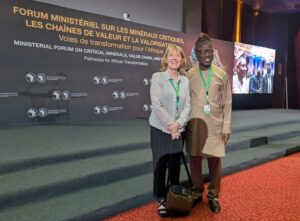
The AMDC’s Mr Tunde Arisekola with Karen Hanghøj, CEO of British Geological Surveys, at the just concluded meeting organised by the African Development Bank, the Ministerial Forum On Critical Minerals, Value Chain, and Beneficiation: Pathway to African Transformation. It took place in July 2026 in Abidjan, Côte d’Ivoire.
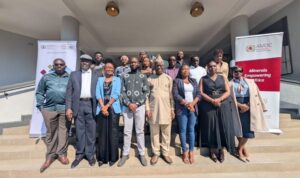
Participants from Eastern and Southern Africa regions at the ongoing AMDC-organised ASM Continental Strategy Book Sprint Session. This meeting took place at Victoria Falls in Zimbabwe in July 2026.