“Nigeria Mining Week represents the country’s and region’s ambitions”
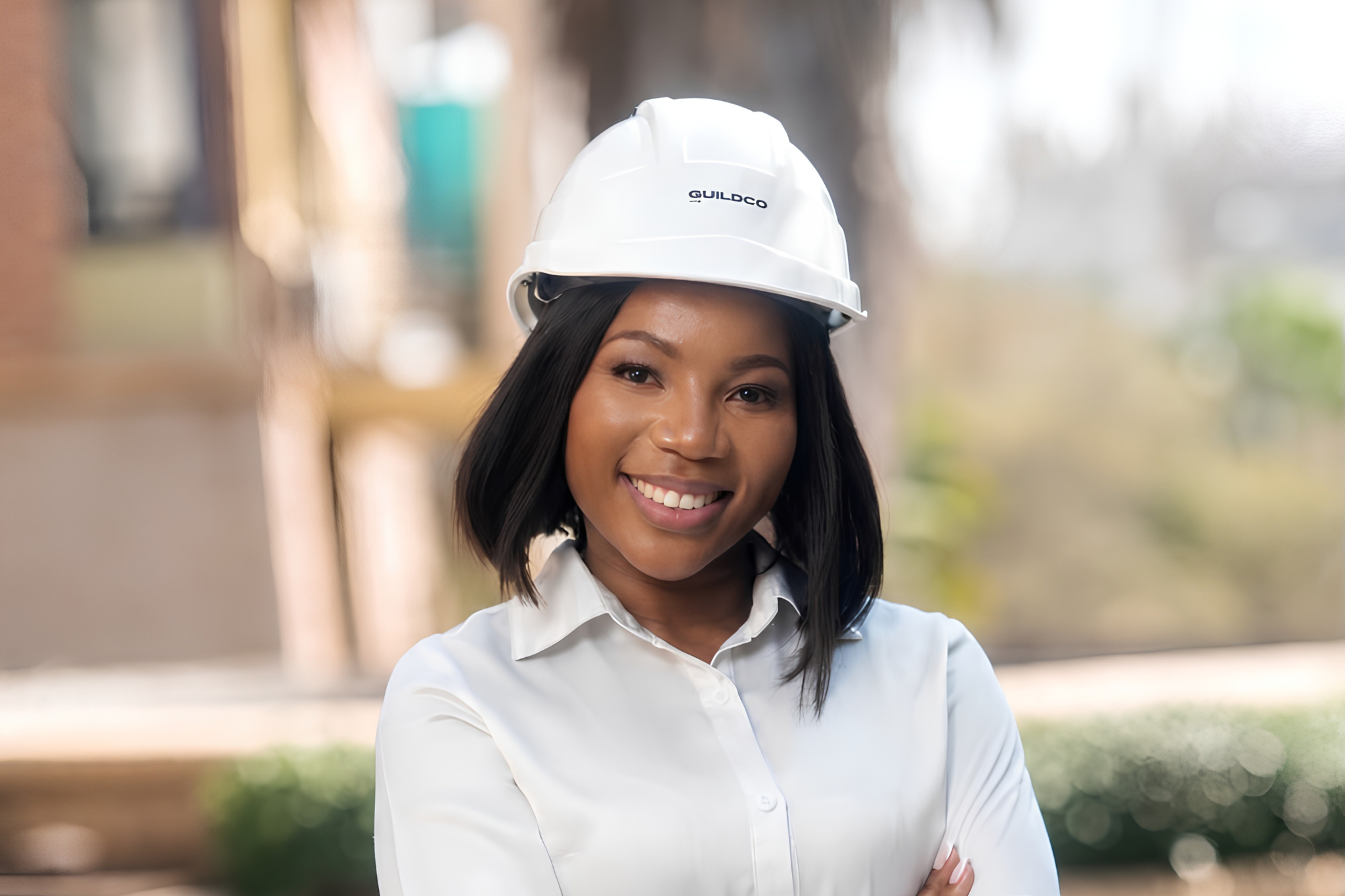
Exclusive interview with Ms. Tiisetso Masekwameng, Executive Director, Guildco Pty Ltd. At the upcoming Nigeria Mining Week, she is part of conference sessions focusing on industrialisation as well as the Steel Day programme.
Interview Summary:
As Executive Director of Guildco Pty Ltd, Ms Tiisetso Masekwameng shares insights on mining, construction and industrialisation in Africa. With 15 years of experience across both sectors, she highlights Guildco’s work in commodity trading and equipment supply, including iron ore projects in Nigeria and construction in South Africa. She stresses that beneficiation is a bridge to industrialisation, enabling Africa to capture more value rather than exporting raw ore and importing finished products. Success, she argues, requires collaboration between government, business and education, with technology, skills and operational excellence working in tandem.
Steel is identified as a major enabler for Nigeria, driving job creation and backward integration across industries. Nigeria Mining Week, she notes, represents both national and regional ambitions, offering a platform for leaders, policymakers and businesses to address gaps in the value chain and advance Africa’s industrialisation agenda.
Thank you for joining us. Let’s start with some background on you and your
organisation.
Thank you so much for having me, and for having us as the Guildco team. It’s an absolute privilege to be part of Nigeria Mining Week and to be invited to contribute to a platform that is helping steer these important conversations forward.
A little bit about me: I’m Tiisetso Masekwameng, Executive Director at Guildco (Pty) Ltd., a mining and construction company that services the value chain across both industries. We provide engineered solutions, supported by integrated service support, civil engineering and mining engineering capabilities. A significant part of our business also operates within the commodity trading space, where we work with chrome, coal and copper.
In terms of my background, I’ve spent the last 15 years working across both the construction and mining industries. During that time, I held both commercial and technical roles, and we’ve brought that experience into the Guildco executive team to help advance mining and industrial development across Africa.
Tell us more about the mining projects that you are involved in. Do you have any particular success stories regarding industrialisation and beneficiation that you can share?
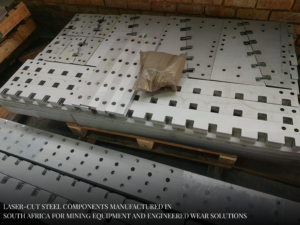
Guildco operates across both the mining and construction sectors, which gives us a unique perspective on how the two industries support one another. Our work spans the full project lifecycle, from manufacturing and supplying specialised equipment to providing engineering and service support across various mining operations.
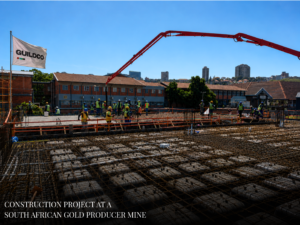
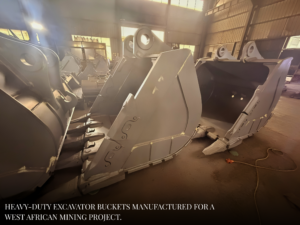
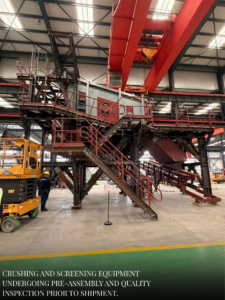
One project that I find particularly exciting is our work with an iron ore mine in Nigeria, where we supply equipment and technical support to the beneficiation process. At the same time, in South Africa, we support construction projects for mining houses within the platinum group metals and gold sectors. Working across both industries allows us to see the entire value chain rather than individual projects in isolation.
What makes the iron ore project especially meaningful is that it demonstrates exactly what industrialisation looks like in practice. The journey doesn’t end with mining the ore. Through beneficiation and palletisation, the material moves into steel production, and that steel ultimately becomes the reinforcing construction steel and structural products that support the construction of roads, bridges, buildings and other critical infrastructure.
For me, that is the real success story. Industrialisation is about intentionally connecting each stage of the value chain—from the rock that comes out of the ground to the industries and infrastructure that improve people’s lives. When countries take ownership of that entire journey, rather than simply exporting raw materials, they create jobs, develop skills, strengthen local industries and capture far greater economic value from their natural resources.
What is required to successfully develop downstream industries, including
investment, infrastructure and policy? And how do you see government’s role
in this?
It is interesting to talk about downstream industries and success without looking at the
role of various leadership sectors. So if we’re talking about government’s role, I like to
particularly mention that government cannot be looked at as the sole party that can
make it work.
Government is great for enabling the environment through policies, in order for business
to actually thrive. But government on its own cannot do everything. And if we want to be
successful in terms of downstream industries, it is important to have a conversation
similar to what is going to happen in Nigeria Mining Week, where government, yes, is
told about how to enable, but even if government enables with policies, if business on its
side is not investing into the right industries, and similarly, in terms of skills development,
if educational institutions are also not a part of it, then we’ve got an incoherent solution.
So yes, government has a major role in creating an enabling environment and understanding what businesses need in order to invest and grow. But business also has an equally important responsibility – to invest in the right industries, create opportunities and contribute to the broader goal of industrialisation. Equally, our educational institutions must be active partners in this journey by developing the engineers, artisans, technicians and professionals who will sustain these industries. When government, business and education work together, we create an ecosystem that allows us to maximise the value of every investment we make and capture far greater value from our natural resources.
Why is beneficiation becoming such an important topic for mining jurisdictions,
and how can African countries practically capture more value from their mineral
resources?
Most would note that there isn’t a single mining industry conference or panel discussion that isn’t talking about beneficiation or industrialisation. The reason is simple: Africa has never lacked mineral resources. We know the continent is rich in iron ore, copper, platinum group metals, gold, lithium and many other strategic minerals. The question is no longer whether we have the resources. The question is how we create greater value from them.
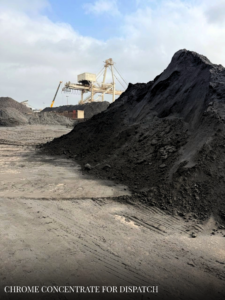
For many years, we’ve mined the ore, exported the raw material and then imported the finished products at a much higher value. Beneficiation challenges us to rethink that model.
For me, beneficiation is not the destination—it is the bridge to industrialisation.
It begins by adding value to the mineral through processing and refining, but it doesn’t stop there. The real opportunity lies in continuing that journey through manufacturing, construction, infrastructure and the industries that ultimately use those materials. That is where countries begin to capture greater economic value, create skilled employment and build more resilient economies.
I also believe every country needs to approach this strategically. Nigeria’s pathway will look different to South Africa’s. The DRC’s opportunities will differ from Zambia’s. Rather than trying to build every possible industry, each country should identify where it already has natural advantages, existing capability and strong downstream demand, and intentionally deepen those value chains.
That is why countries across Africa are having these conversations today. Beneficiation is no longer viewed simply as a mining initiative; it is increasingly recognised as an economic development strategy. When we move beyond exporting raw materials and begin building industries around our mineral resources, we move much closer to achieving meaningful and sustainable industrialisation.
How important are technology, skills and operational excellence in modern
processing facilities?
Technology, skills and operational excellence cannot be viewed as separate pillars. They are interdependent, and the success of any modern processing facility depends on all three working together.
Technology is a powerful enabler. It allows us to improve efficiency, optimise recovery, enhance safety and operate more competitively. However, technology on its own does not create value. Without the right technical skills to operate, maintain and optimise that technology, we simply become dependent on importing expertise rather than building it locally.
Equally, having skilled people without a culture of operational excellence means we never realise the full value of those investments. Operational excellence is about discipline, continuous improvement, leadership, maintenance, safety and understanding how every stage of the process contributes to the overall performance of the plant.
I prefer to think of these as a connected ecosystem rather than individual components. Technology provides the tools, skills provide the capability, and operational excellence ensures those capabilities are consistently translated into performance. Surrounding all of that are leadership, government and educational institutions, each playing a role in creating an environment where these pillars can thrive.
When these elements work together, they do far more than improve the performance of a processing plant. They build the capability that supports industrialisation, creates skilled employment and enables Africa to capture greater value from its mineral resources.
Which minerals present the greatest beneficiation opportunities today?
The question of which minerals present the greatest beneficiation opportunities today is one that could easily be answered by listing individual minerals. But strategically, and more importantly, I believe we need to look at this from a country-level perspective. As Africa, as I’ve mentioned, we have all of the minerals we need. That is not in question.
We know that PGMs are a major strength here in South Africa. We know that copper is well established in the DRC, and we know that Ghana and many parts of West Africa have world-class gold resources. The opportunity is there across the continent.
The question of where the greatest beneficiation opportunities lie cannot be answered simply by looking at minerals. It needs to be answered at a country level. As leaders, we need to ask ourselves: where is the lowest-hanging fruit?
As an example, if we look at Ghana and its gold industry, the question becomes: where are the missing links in that value chain? Ghana already produces billions of dollars’ worth of gold every year, but how much more value can be retained locally through refining, fabrication and the development of downstream industries? How do we ensure that more of that value circulates within the economy rather than being created elsewhere?
Similarly, if we look at the DRC, the conversation begins with asking what capabilities already exist. The country has established itself as one of the world’s leading copper producers. As global demand shifts towards electrification, the opportunity is to industrialise around that existing capability rather than starting somewhere entirely new. From there, the country can continue building the additional industries that support its broader industrialisation journey.
So, for me, we cannot look at minerals simply in terms of what the rest of the world is talking about. We have to look at them within the context of each country’s existing capabilities and ask how we strengthen those value chains. That is how we unlock the greatest beneficiation opportunities and create sustainable industrialisation.
At the upcoming Nigeria Mining Week, you are part of sessions on
industrialisation, including one titled “From Ore to Industry – Beneficiation &
Refining.” What will be your message at the event?
It is going to be an absolute honour to be part of the conversation on beneficiation and refining. For me, the key phrase in that session title is “From Ore to Industry.” My message, and one that I think I’ll be harping on for a very long time, is “from rock to bridge!”, How do we make that journey?
We’ll be speaking about what we’ve already identified. There is a lot of exploration happening in Nigeria. People are talking about lithium. We know there are existing coal mines, iron ore deposits, and we know that companies like Dangote have built significant industrial capability through cement. So the question becomes: from digging to industry, where are the gaps?
Looking at the products that are already coming out of the ground and currently being exported, we need to ask: what are we exporting, and what finished products are we importing that could be made from those very same resources? That gap is the conversation I want to have with leaders, policymakers and the business community. Where are the missing links in the value chain, and how do we close them?
If you’ve got the ore and you’ve got a growing economy—Nigeria is a perfect example, where you can visibly see how the landscape is changing through construction—then we need to ask how we get from the rock in the ground to the industries that are building our cities. We have to look at that entire value chain and intentionally fill the gaps, because that is what creates industries, jobs and long-term economic value.
The beautiful thing about many African countries is that we have a young and growing population. Those young people are the ones we need to equip with the right skills so that we can truly move from ore to industry while retaining and circulating more of the value from our mineral resources within our own economies.
You are also part of Steel Day at the event, and you are a panellist on a
discussion about revitalising the sector. What are you looking forward to most
regarding this session, and how important is the steel sector for Nigeria?
My goodness, it almost feels like this is the theme I’ve been speaking about throughout the interview. Steel Day is certainly going to be one of the highlights for me during Nigeria Mining Week.
When I think about steel, many people see it as simply another sector. I actually see steel as one of the greatest enablers of industrialisation. If you’re producing steel locally, sourcing your raw materials locally and processing them within your own region, just think about the impact that has across the economy. You’re creating opportunities for engineers, artisans and technicians, while building an entire ecosystem of skills that stretches from mining all the way through to manufacturing and construction.
That’s why I see steel as an enabler rather than simply another industry. It demonstrates what industrialisation looks like in practice. I think Nigeria already has some excellent examples of businesses that are strengthening the country’s steel value chain and showing how keeping more of that value within the economy benefits everyone.
It is also incredibly important that the rest of us across Africa come and learn from one another. We should be looking at countries like Nigeria and asking, what are they doing well? How are they creating successful examples of backward integration, where steel is not the end goal but rather the catalyst for many other industries to develop?
When you look at what happens around a thriving steel industry, you begin to see logistics companies growing, major construction businesses expanding and increased demand for mining and mineral processing. If Nigeria can continue developing those upstream and downstream linkages, the country captures more value from its own resources instead of relying on imports. That is why steel is so important.
Perhaps we need to move away from thinking of steel as simply another sector and start recognising it for what it really is – a major enabler of industrialisation and one of the strongest examples of how countries can build integrated value chains. I believe there is a great deal that many African countries can learn from Nigeria’s journey.
How important is Nigeria Mining Week on the extractive calendar in the region?
Nigeria Mining Week is very important on the extractive calendar in the region. What I think is particularly important about Nigeria Mining Week is that it represents ambition. It represents the ambition of a nation that wants to be great, and similarly, it represents the shared ambitions of all of us across Africa and what we want to achieve through collaboration.
Nigeria Mining Week doesn’t only attract Nigerians. It brings together Southern Africans, Central Africans, East Africans and North Africans. There will also be many of my counterparts from across Asia and Europe participating in these conversations. That makes it an important platform where the ambitions of both Nigeria and the wider African region can be discussed, while learning from successful examples both within Africa and from other parts of the world.
If you look at what South Africa has achieved in terms of PGMs, together with a strong automotive manufacturing sector, you begin to see how mining and manufacturing can support one another. The question then becomes: where are the remaining gaps in that value chain, and how do we close them to further industrialise the economy?
As South Africans, we should continue asking what else is missing in that value chain. How do we strengthen downstream industries around catalytic converters, hydrogen technologies and the other products that complete the value chain? Those are the kinds of conversations that drive real industrialisation.
It is important that countries across the region continue learning from one another—understanding what is working in South Africa, what is working in Nigeria, and what is working elsewhere across the continent. At the same time, we should continue learning from our international counterparts so that together we can develop practical strategies that move Africa towards the industrial future we all want to achieve.
Any final thoughts from your side?
the most important thing for me is that I’m genuinely excited to be part of this journey. One of the most important aspects of Nigeria Mining Week is not just what happens during the conference itself on the 12th, 13th and 14th of October, but what happens afterwards.
What does government do with the conversations we’ve had? What actions does business take? How do we move from discussion to implementation? Those are the questions that really matter.
I look forward to continuing these conversations and, more importantly, to putting pen to paper and taking practical steps forward. I’m looking forward to honest discussions and practical solutions that will help bring industrialisation not only to Nigeria, but to the many regions and countries represented at the conference.
Ultimately, my hope is that we create a brighter future for the next generation by ensuring that Africa captures the true value of the minerals beneath our feet, rather than simply exporting them. If we can achieve that, then I believe we’ve truly begun the journey from ore to industry.
Thank you so much for having me. It has been an absolute pleasure.