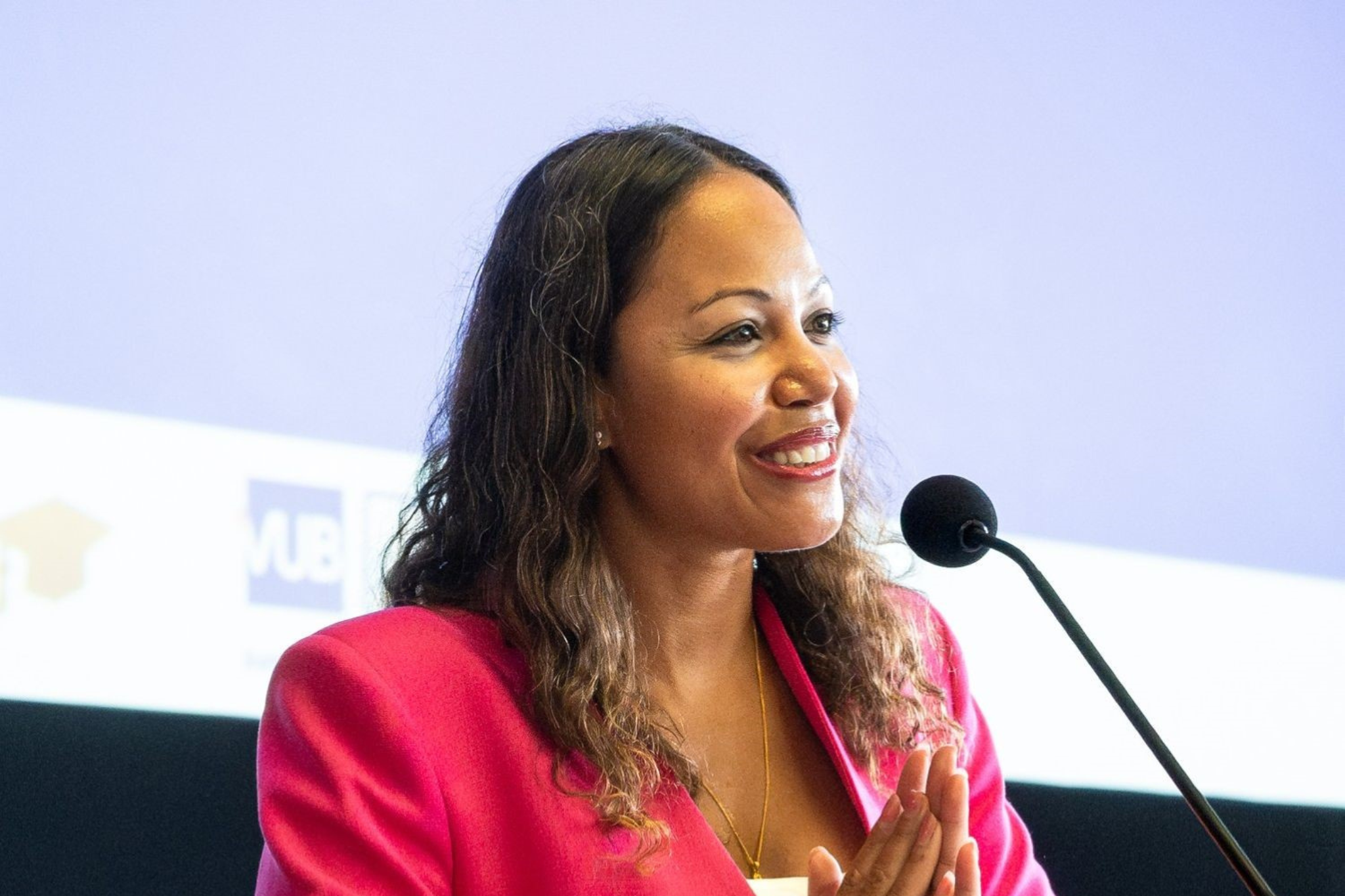
“ESG has become a global trade language”
Exclusive interview with Francine Carron, Founder and CEO, ESG Consultancy. At the upcoming Nigeria Mining Week, she is part of a session on ESG and sustainability, titled “ESG that wins investments.”
Interview Summary:
ESG Consultancy Founder and CEO Francine Carron highlights the role of ESG as a global trade language and a key to competitive advantage. Her firm works across Europe, Africa and Asia, advising on hard to abate emissions. She cites a Liberian mining project that prioritised community engagement and environmental analysis before production as a model of responsible mining.
Caron stresses that investors seek risk management, transparency and verifiable ESG data rather than perfection. She argues that community engagement, inclusivity and responsible governance build resilience and attract investment. At Nigeria Mining Week, her message is clear: ESG must be embedded into operations to secure long-term competitiveness.
Thank you for joining us. Let’s start with some background on you and ESG Consultancy.
Hello everyone, I’m Francine Carron, the founder and CEO of ESG Consultancy. ESG Consultancy is a boutique firm specialised in ESG consultancy for hard to abate emissions. We work across Europe, Africa and Asia and I sit in our regional office in Hainan, China today. My passion is making sure that companies understand that ESG is not just a reporting exercise, but is actually a key for competitive advantage.
Tell us more about the mining projects that you are involved in? Do you have any particular success stories regarding ESG projects that you can share?
One of our clients has a mining firm in Liberia, West Africa. And when they started, they actually started with the idea of becoming a responsible miner. When they came to us, it was actually still a thought, a plan. So what I like about this client is that they were like: “We are first going to look into the community. How can we partner with the community and how can we preserve the environment?”
So right now they’re doing an environmental analysis, they are working on community engagement, and then they will start their production. So I feel that this is one of the projects that will be in the future a beautiful example of responsible mining.
Now, what we hope to actually gain at Nigeria Mining Week is to talk to people that are interested in bringing together small miners; bringing them together into one cooperative so that they can learn about ESG and also become players on the global market.

What are investors looking for when assessing a company’s ESG performance?
When investors are assessing a company’s ESG performance, they are always looking for risk management. They want to know if you understand as an organisation your environmental impact? Do you understand your social impact? And if you do understand it, how are you going to govern it? So they want to hear from you “the how.”
They’re actually not looking for perfection right at the moment. They are looking at how you are going to handle these matters in the future, because investors actually want to reduce uncertainties. So if you reduce your uncertainties, you attract investment. So that is why it is so important to have your ESG in order.
ESG is not a reporting exercise. It is much more than that. It needs to be embedded completely into your operations, so that when investors are looking at you, they say, “Okay, they know how to handle their impact.” And that is what they want to see.
How can mining companies build stronger relationships with local communities?
Before they actually start production, mining companies should already engage with the local community. Actually, everything starts before production. And an example of that is the Belgian miner in Liberia. You go into these communities and you need to be able to explain to them what your plan is, and what is the benefit for them? Is their environment going to change? Is there going to be environmental damage; in case of yes, how are you going to solve it? Will you provide community programmes? Will you provide work? If there is not a lot of work for them in the community, will you provide programmes where they can get certain skills? Will you work with local suppliers? All of this really needs to be answered.
So it is very important for a miner to have respect for these communities because they’re operating in their environment. So community engagement is part of good business and good risk management for a miner. This is not about philanthropic engagements or any of that sort. It is proper community management. Because if you can create an ecosystem around your mine that is very strong, the more resilient your mine will be.
How important is transparency in attracting long-term investment?
This is a very good question. How important is transparency in attracting long term investment? Transparency is key. Transparency today is one of your most important assets, because investors and buyers want to know what is happening in your supply chain. They want to know the traceability.
None of this is a compliance issue. You need to be able to say where it is coming from, who’s attracting it, how is it managed? All of those questions need to be answered, because transparency builds trust. And trust is the most important aspect that you can have in your business.
How can the mining sector support more inclusive and sustainable development?
For the mining sector to become more inclusive, first of all, we go back to the discussion on community management, providing community programmes, providing programmes for youth, for youth to develop their skills, providing opportunities for women, making sure that the environment is protected and that can be done together with the local community. Outside experts do not need to be brought in for this. You can work together. Many of those communities have the knowledge.
So together, you can build an inclusive and responsible mine. And the stronger that community becomes, the better your programmes are, the more chances that you have for a responsible mine to lead to sustainable development.
What are the biggest ESG challenges facing mining companies today?
The biggest challenges that mining companies are facing today and the biggest ESG challenges is actually understanding what ESG is. A lot of experts will tell you about being compliant. They will tell you about what you need to report, but they will not explain to you that ESG is actually what gets you a seat at the table today. Back in the day, investors and buyers were looking at price, delivery and quality. But nowadays, when you’re facing an investor, they’re going to ask you about your traceability, about ethical sourcing, about local suppliers. So before you even get a chance to discuss price or delivery, you need to be able to answer questions on ESG and your data needs to be verifiable.
So that means that ESG has become a global trade language and it needs to be embedded within your organisation. So the challenge for mining companies, which is really the same challenge actually for many companies, is to understand that ESG will lead them to being more transparent and more competitive for the future.
What is your vision for the role of ESG in the extractive industries?
The role of ESG is, I think, very, very important in this industry. I remember back in the day when we were talking about sustainable mining, and sustainable mining is a word that we should never use. We should use responsible mining, because when you are extracting something, it is not sustainable as such, but it can be done in a responsible way. And ESG can provide you the framework, can provide you the business model for you to do that in a responsible way. That means providing safer working conditions. That means managing the environment. That means managing your wastewater, managing water and managing community programmes.
So it is very important for ESG to be fully embedded in the industry, because the mining companies that are ESG-ready today, and we’re not looking for perfection, but the ones that have embedded into their procurement, into their financing, they will be commercially more competitive. They will have a seat at the table and they will secure investments, partners and buyers in the future.
At the upcoming Nigeria Mining Week, you are part of a session on ESG and sustainability, titled “ESG that wins investments.” What will be your message at the event?
My message at Nigeria Mining Week will be very simple. ESG is a global trade language. That will be my message. And with that, I mean, if you want to have a seat at the table, if you want to have funding, investors and partners in the future, embed ESG within your organisation today.
Because if you do not do this, if you do not have verifiable ESG data, if you do not understand that buyers and investors first will discuss ESG before they will discuss anything else, you will lose in the long term. So my message will be very clear. ESG is not a reporting exercise. ESG is a global trade language and it will be your key to getting through this green transition and your path forward in a decarbonised world.
How important is Nigeria Mining Week on the extractive calendar in the region?
I believe Nigeria Mining Week is very important in the region because it brings together governments, brings together investors, brings together buyers, it brings together all of the stakeholders in one place at a time where Nigeria is trying to position itself very clearly in the critical mineral global supply chain. So I think Nigeria Mining Week is definitely one to attend and one to watch.
Any final thoughts from your side?
My final thoughts on Nigeria Mining Week are that Nigeria sits in a very unique position as a country right now. And if it can demonstrate responsible production, transparency and strong governance, it will be positioned to be very promising in the future. And my message for Nigeria is very optimistic in terms of ESG. We work with a lot of ESG professionals in Nigeria and there’s a large network in Nigeria as well. That ESG is not an obstacle, but it is your key to competitive advantage.