UN-Habitat: “Our Africa Affordable Housing Compact demonstrates that affordable housing can generate both economic and social returns”
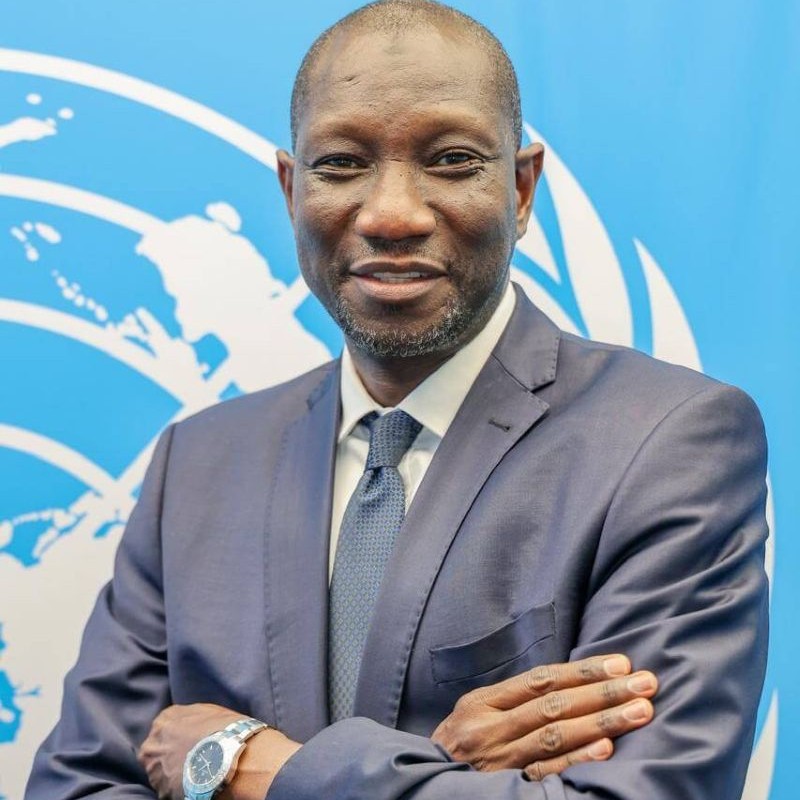
Exclusive interview with Oumar Sylla, Director, Regional Office for Africa, UN-Habitat. The UN is celebrating Urban October with World Cities Day and World Habitat Day with an overarching theme of “Adequate Housing for All.”
Interview Summary:
Oumar Sylla highlights UN Habitat’s mission to ensure adequate housing and sustainable urbanisation across Africa. With over 25 years of experience in land governance and urban development, he stresses the urgency of addressing rapid urbanisation, housing deficits, climate risks, and conflict driven displacement. Africa faces a housing gap of more than 51 million units, projected to exceed 130 million by 2030, while over half of urban residents live in informal settlements.
Sylla identifies opportunities for private sector investment in affordable housing, infrastructure, and climate resilient services, but notes the need for enabling policies and financing. He introduces the Africa Affordable Housing Compact, which mobilises partnerships, data, and financing to accelerate delivery and reduce risks. His vision is an urban Africa where housing ensures dignity, resilience, and opportunity, with empowered local governments and inclusive growth in both major and secondary cities. The Director of UN-Habitat’s Regional Office for Africa urges immediate action to harness urbanisation for prosperity.
Thank you for joining us. Please can we start with some background on you and what you do at UN-Habitat?
Thank you for having me. My name is Oumar Sylla, and I am the Director of the Regional Office for Africa at UN-Habitat. I have over 25 years of experience working on land governance, natural resources management, conflict resolution, urban development and international cooperation.
Throughout my career at UN-Habitat, I have held several positions, including leading the Global Land Tool Network Unit, serving as a Senior Adviser on Urban Policy for Francophone Africa, and working as Chief Technical Adviser in the Democratic Republic of the Congo. These experiences have given me a strong appreciation of how land, housing and urban development are interconnected, and how they influence economic opportunities, social inclusion and peace.
UN-Habitat is the United Nations agency mandated to promote socially and environmentally sustainable towns and cities, with the objective of ensuring adequate housing for all. In Africa, we work with national and local governments, the African Union, development partners, financial institutions and communities to advance sustainable urbanisation.
Our work is guided by UN-Habitat’s Strategic Plan 2026–2029, which places housing, land and basic services for all, including the transformation of informal settlements, at the centre of our interventions. Across Sub Saharan Africa, which I cover, we are particularly focusing on three main impact priorities:
- Transforming informal settlements into well-planned, inclusive and serviced neighbourhoods.
- Promoting durable solutions for communities affected by conflicts and displacement, using housing, land and basic services to strengthen peace and social cohesion.
- Strengthening the climate resilience of African cities and human settlements.
In your view, what are the main challenges that the continent is facing with regards to urban development of cities? And what are the opportunities?
1. Rapid urbanisation
- Currently Africa is urbanising at an unprecedented rate, in 2000 Africa’s urban population was roughly 35%, right now we are at about 46% and by 2050 it is projected that we will have more than 57% of Africans living in urban areas.
- This rapid urbanisation is outpacing investments in public infrastructure and services, urban governance and provision of employment and economic opportunities.
- Many cities are expanding without adequate planning, increasing urban sprawl and the costs of providing roads, utilities, transport and other essential infrastructure.
- Unplanned urban expansion increases the cost of land development, infrastructure provision and service delivery, making projects more expensive and difficult to finance. At the same time, growing urban populations create substantial demand for housing, infrastructure, transport, energy and municipal services, presenting significant investment opportunities.
2. Housing and informal settlements
- Africa is facing a huge demand gap for Affordable Housing units of over 51 Million with this potentially increasing north of 130 Million by 2030. To add to that more than 56% of urban population in Sub Saharan Africa live in informal settlements with limited access to basic services, tenable housing structures and exposure to extreme climate events.
- Africa’s Housing challenge is on the supply and demand side of its delivery, in the sense that Housing supply is not keeping pace with the population growth and demands, particularly for the bottom 50% of the urban population i,e the low- and mid-income households.
- On the supply side we see limited financing models for developers, inconsistencies in governance, weak and incoherent data on housing needs, and lack of serviced land that can aid supply of affordable housing.
- On the demand side, we see access to financing as a major factor (less than 15% of urban population can access formal financing and land tenure challenges.
3. Climate change and environmental risks
- It is projected that more than Africa will incur about USD 50 Billion infrastructure and housing damage from floods and droughts in African countries by 2050.
- African cities face increasing exposure to flooding, extreme heat, drought, sea level rise among other climate related hazards.
- Majority of African cities are undergoing urban sprawl with human settlement expansion to floodplains, wetlands and environmentally sensitive areas.
- Climate shocks damage housing, roads, drainage systems, water infrastructure and economic assets, while disrupting services, livelihoods and urban productivity.
- These risks are particularly concerning given the limited financing available to local governments for climate adaptation and resilient infrastructure.
4. Conflict and fragility
- Conflict, insecurity and forced displacement continue to shape Africa’s urban development patterns. In 2024 more than 11 million people have been displaced due to conflict.
- Cities and towns increasingly serve as destinations for displaced populations, placing additional pressure on housing, land, basic services, infrastructure and already constrained municipal resources.
- Weak land governance, competing land claims and insecure tenure can also contribute to tensions and undermine social cohesion and investment in urban areas.
What are the opportunities for the private sector in urbanisation on the continent?
Affordable housing sector is a particularly important opportunity. The continent’s growing housing deficit creates demand for housing development, building materials, innovative construction technologies, mortgage finance, rental housing and alternative financing models. However, Africa’s housing challenge also requires innovation in affordability. The private sector needs to develop products and financing solutions that respond to the purchasing power of low- and middle-income households.
Urban infrastructure and municipal services present another opportunity, particularly in water and sanitation, solid waste management, recycling, renewable energy, public transport and climate-resilient infrastructure.
Secondary cities and economic corridors offer opportunities for investment in industrial facilities, logistics, housing, markets and essential services that support local economic development. Smart cities and digital technologies also provide opportunities to improve urban management, land administration, service delivery and municipal revenue generation.
However, private sector investments require enabling conditions. Governments must strengthen urban planning, land governance, regulatory frameworks and access to affordable long-term financing.
This is where partnerships become critical. UN-Habitat is promoting stronger collaboration between governments, development finance institutions and private investors to identify viable projects and develop sustainable investment models. Through initiatives such as the Africa Affordable Housing Compact, we aim to help connect housing needs with financing opportunities and demonstrate that affordable housing can generate both economic and social returns.
Are there any particular projects you are involved in that you are especially excited about?
a. Africa Affordable Housing Compact
- Affordable Housing Compact
- With the trends within the housing sector, our ambition is to transform Africa’s housing challenge into an opportunity for investment, job creation and improved living standards, while keeping affordability at the centre.
- This is why we are promoting the Africa Affordable Housing Compact. It is a continental initiative that brings together governments, development finance institutions, private investors, developers and other partners to accelerate affordable housing delivery.
- The Compact focuses on strengthening enabling policies, preparing bankable housing projects, mobilising innovative financing and building the capacity of both public and private sector actors.
- Three major mechanisms are being developed:
- Affordable Housing Deal Platform: Facilitating project preparation, financing and matchmaking between housing developers, governments and potential investors.
- Housing Data Hub: Strengthening housing data to support informed policy decisions, market assessments and investment planning.
- Executive Fellowship Programme: Building the capacities of public and private sector professionals in housing policy, finance, project structuring and sustainable housing delivery.
- Importantly, the Compact also seeks to reduce investment risks, improve investor confidence and create an enabling environment for greater private sector participation in housing development.
b. Strengthening Africa’s urban development agenda through the African Union
- Positioning urban development into the continental agenda illustrates our commitment to ensure that urbanisation is recognised as a strategic investment opportunity capable of transforming African economies.
- Our collaboration with the African Union is to position sustainable urbanisation as a strategic priority within Africa’s broader development and economic transformation agenda.
- A major milestone has been the establishment of the Africa Urban Forum, which provides a continental platform for governments, cities, development institutions and private sector partners to advance sustainable urban development. Through this platform, we are promoting stronger political commitments, coordinated policies, partnerships and investments aligned with the African Union’s Agenda 2063. So far we have held the first and second Africa Urban Forum in Addis Ababa and Nairobi, respectively.
- We are also collaborating with AUDA-NEPAD to integrate urban development perspectives into continental infrastructure investments and regional economic corridors. Africa is investing in transport corridors, energy infrastructure and regional connectivity, but these investments also influence the growth of cities, towns and settlements along these corridors. Our objective is to ensure that major infrastructure projects incorporate housing, land-use planning, basic services, local economic development and climate resilience. This also creates opportunities for project preparation, investment mobilisation and private sector participation in emerging urban centres, particularly secondary cities along economic corridors.
The United Nations is celebrating Urban October with World Cities Day and World Habitat Day with an overarching theme of “Adequate Housing for All.” What is your vision for what a future urban Africa looks like?
My vision is an urban Africa where every person has access to adequate housing, secure land tenure, essential services and opportunities to improve their livelihoods.
Housing is at the centre of this vision because adequate housing is more than a roof over one’s head. It is about dignity, safety, security and access to economic and social opportunities.
I envision African cities where informal settlements are progressively transformed into well-planned, serviced and inclusive neighbourhoods, rather than places where people are excluded from the benefits of urban development.
I see cities that are economically productive, providing opportunities for young people, women and entrepreneurs to participate fully in urban economies. I also envision cities that are resilient to climate change, with sustainable buildings, efficient transport systems, clean energy and accessible green and public spaces.
Equally important is the need for strong and empowered local governments, with the institutional capacities and financial resources to guide urban growth, provide services and attract investments.
We must also recognise that Africa’s urban future is not limited to major cities such as Nairobi, Lagos, Johannesburg or Addis Ababa. Secondary cities and smaller urban centres will be equally important in shaping the continent’s future.
Any final thoughts from your side?
Africa is at a defining moment in its urban development journey. The decisions and investments we make today will shape the continent’s cities and communities for generations to come. We must recognise that urbanisation is not merely a demographic trend; it is a powerful force for economic transformation, innovation and sustainable development.
However, unlocking this potential requires moving beyond policy commitments towards implementation, with greater emphasis on project preparation, investment mobilisation, institutional strengthening and delivery.
Governments have a crucial responsibility to establish enabling policy and regulatory environments, while the private sector brings capital, innovation, technical expertise and implementation capacity.
As we celebrate Urban October, I would encourage governments, investors and development partners to recognise that investing in adequate housing and sustainable cities is ultimately investing in Africa’s prosperity and future.
Thank you for this opportunity.




.webp)

.webp)
.webp)
.webp)
