
Exclusive interview with Azaria Kilimba, Operations Manager, Carbon Tanzania.

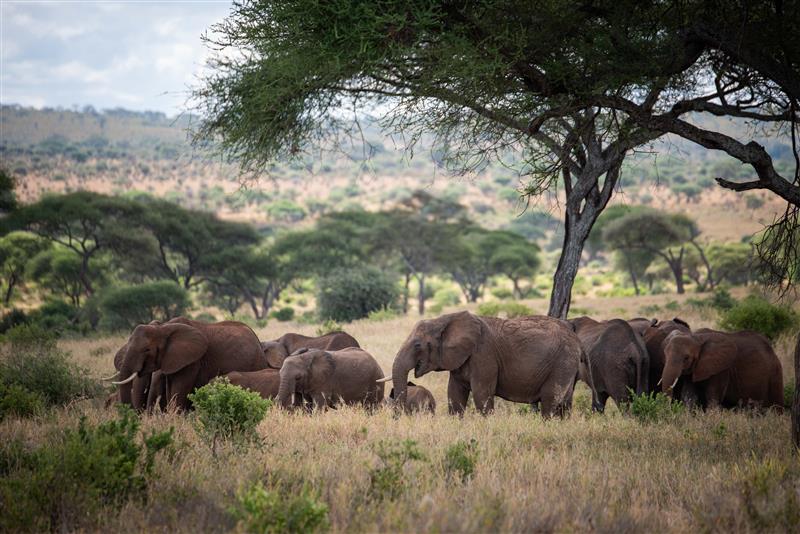
Main photograph caption: Elephants in the Makame Savannah project area. Credit: Carbon Tanzania/Roshni Lodhia
Interview Summary:
Azaria Kilimba, Operations Manager at Carbon Tanzania, explains how the company channels revenue from nature‑based carbon credits to local communities, enabling them to lead conservation and invest in education and healthcare. With deforestation driving most of Tanzania’s emissions, their projects protect forests, biodiversity and endangered species while securing livelihoods. Certified under international standards, credits are rigorously verified and attract price premiums due to their social and ecological benefits.
Kilimba highlights Africa’s vital role in high‑integrity carbon markets, stressing permanence, transparency and community sovereignty. The most rewarding aspect is seeing communities use carbon finance to meet daily needs and reduce deforestation drivers, while the greatest challenge lies in strengthening governance and dispelling misconceptions about community‑led avoidance projects.
My name is Azaria Kilimba and I have a background in conservation. I’ve been working for more than 15 years in natural resources management, but particularly community-based natural resources management.
As a Tanzanian company, our goal is to generate value for Tanzanians by generating and selling nature-based carbon credits. We channel the carbon revenue earned from selling these credits from global companies to local communities, ensuring Tanzanians realise the value of their natural ecosystems. Our equitable business model continues to deliver measurable development outcomes for Tanzanians.
In Tanzania, 70% of the country’s emissions come from deforestation, the majority of that stems from land-use change. You can’t tackle climate change without addressing deforestation. Forests on community owned or managed land is under threat and needs finance. Without the revenue generated by our projects, the forests wouldn’t be protected due to the lack of finance.
Livelihoods – Protecting nature requires the support of local communities. That is why we create equitable partnerships with local communities. That means they lead the conservation activities and receive the majority share of the revenue generated from carbon credit sales (61%). This revenue is then used to protect the forests and build their communities through development initiatives as determined by them – improving access to education and healthcare. Our community-led approach ensures the local people are recognised and fairly rewarded for their protection efforts.
Biodiversity – Forests contain incredible amounts of biodiversity with endemic species found in a number of our project sites. Once these species are gone, they can’t be replaced; they need protection now. Compared to tech based credits, when nature-based credits are used in a company’s offsetting strategy that are the more cost effective and immediately scalable.
Our projects are certified by international certification standards such as Plan Vivo and VCS, both of which demand that carbon projects explicitly address and include the development need of communities. We monitor our projects’ impact through a robust MRV process. However, we don’t mark our own homework, a third party audits our results through satellites and field visits. Methodologies are evolving as the market matures. We are currently transitioning our projects to the latest, more conservative methodology that have received the Core Carbon Principle (CCP) label by the ICVCM – a globally recognised mark of quality.
It is true to say that in some situations across Africa conservation goals have been prioritised over the socio-economic needs of people and communities. However our model is built on the principle that conservation must be an economic choice that respects local and indigenous sovereignty.
Robust community land rights form the foundation of our projects ensuring the local communities are the legal owners of the natural resources and any credits generated. Conservation activities are conducted by the local communities, aligning with traditional knowledge, local land use plans and village by-laws. The communities train and employ the scouts to protect the forest. We also follow an ongoing FPIC (Free, Prior, INformed Consent) process that ensures we are constantly listening to our community partners. Additionally we deploy a social change evaluation tool that helps us learn from our partners lived experiences of the project and identify gaps. This approach allows us to understand the social change brought about by the addition of carbon revenue into the community, both positive and negative.

Indigenous Datooga protecting their forest. Credit: Carbon Tanzania/Roshni Lodhia
All of our projects connect to a wider ecosystem securing seasonal dispersal areas for large species that need connected large landscapes to thrive and enhancing conservation outcomes across the wider landscape. Endemic bird species and 17 endangered species can be found across our project areas including rare and endangered animals such as chimpanzees, lion and leopard. A good example of a project contributing to the protection of an endangered mammal is in the Makame Savannah project area which protects a breeding ground for a population of endangered African Wild Dogs.
Buyers increasingly demand high-quality nature-based credits from projects that equitably involve local communities and that provide social and biodiversity benefits, known often as co-benefits. We don’t see them as co-benefits. We see them as central to our project and its success. Gone are the days when buyers bought avoided deforestation projects at rock bottom prices. Projects that provide both biodiversity and livelihood benefits are attracting a price premium, ensuring Tanzanians earn significant revenues from their commitment to protect the landscapes we all need to mitigate global climate change. These principals have been embedded in our projects from the outset of our first project 15 years ago. Permanence is another concern for many buyers.
Because we secure 40-year contracts, we aren’t just stopping deforestation for today; we are creating a permanent legal and economic shift that makes the forest a multi-generational asset. The last trend is the need for transparency and the use of digital MRV. We believe tech that has been tailored to the local environment and its users can enhance processes and transparency. That is why we use the Sensing Clues’ Cluey App to monitor and track activity within the forest. Importantly, the communities aren’t just providing data for us; they are using this digital information to manage their own resources and defend their land rights.
The continent has vast forests, mangroves, woodlands and savannahs – natural carbon sinks that are under threat and that can benefit from finance generated through the carbon markets. Many of these areas are under the stewardship of local communities who bear the cost of protecting and managing them. When nature-based projects are implemented with integrity, the people stand to benefit not only from the ecosystem services that a thriving landscape provides but the development of the local economy, which creates resilient livelihoods, secures land rights, and provides direct, sustainable funding for community-led infrastructure like schools, clinics, and clean water systems.

Local communities protecting their forest with land use plans in the Yaeda-Eyasi Landscape project area. Credit: Carbon Tanzania/Roshni Lodhia
There is a lag in buyer understanding between the low-quality offsets of the past and today’s high-quality avoidance projects. Many corporate buyers are still haunted by headlines of early-generation projects that lacked transparency or community consent. Our challenge is educating them on the “new reality”: that todays, high-quality avoidance projects, like ours, isn’t just about “not cutting trees,” but involves rigorous, evidenced-backed proof of impact, legal land tenure, and verifiable social equity.
Second, we are dealing with real people’s lives. When global carbon prices fluctuate, we have to manage our community partners’ expectations. They see the carbon market as a reliable source of finance and we need to ensure that revenue remains stable and predictable despite market swings. It is a constant financial balancing act.
Third, we have to navigate three layers of rules simultaneously: Tanzanian national regulations, international standards (like Verra), and emerging global frameworks (like ICVCM). When these don’t align, it creates administrative bottlenecks that can delay payments to the communities.
The most rewarding aspect of this field, I think, having come from a background of supporting communities in nature-based management in a country like Tanzania, is the evolution of the powers that have only existed in the resources. And we weren’t anywhere close to being able to evidence the magnitude of the finance that we see in the carbon space. I have personally been working in spaces that involve sustainable timber harvesting, piloting models that involve forest certification, which are quite good for conservation, but we hadn’t really reached a point where we could see forest resources really generating equitable revenue to these communities to a level where they could address and be able to implement projects that respond to their daily economical demands.
The carbon projects we do and the carbon market model we use are different in the sense that they delivering such magnitude of finance to these communities, that it enables them to really address the daily demands that they have in terms of livelihood. We have seen communities actually establishing health- and education-related projects, and really resolving the key challenges that derived them to do deforestation earlier. This, to me, has been quite a rewarding aspect.
However, with this level of finance, one of the challenging things is also positioning communities to be able to handle this finance better. We invest a lot in building governance frameworks in the communities, trying to educate them on how best to manage finances. And this is really is growing more and more and communities are actually adapting towards improving how they’re managing finances at this level.
That avoided deforestation projects that work with local communities is a risk. When you involve local communities equitably from the start you are increasing the projects chances of success, and therefore reducing the risk of failure in the long term.
Africa's Green Economy Summit connects industry professionals and organisations to information and each other in a carefully curated live environment. Its purpose is to support in mobilising investments for green projects to scale up and industrialisation, which will have a significant impact on environmental sustainability and economic growth.


.webp)

.webp)
.webp)
.webp)
