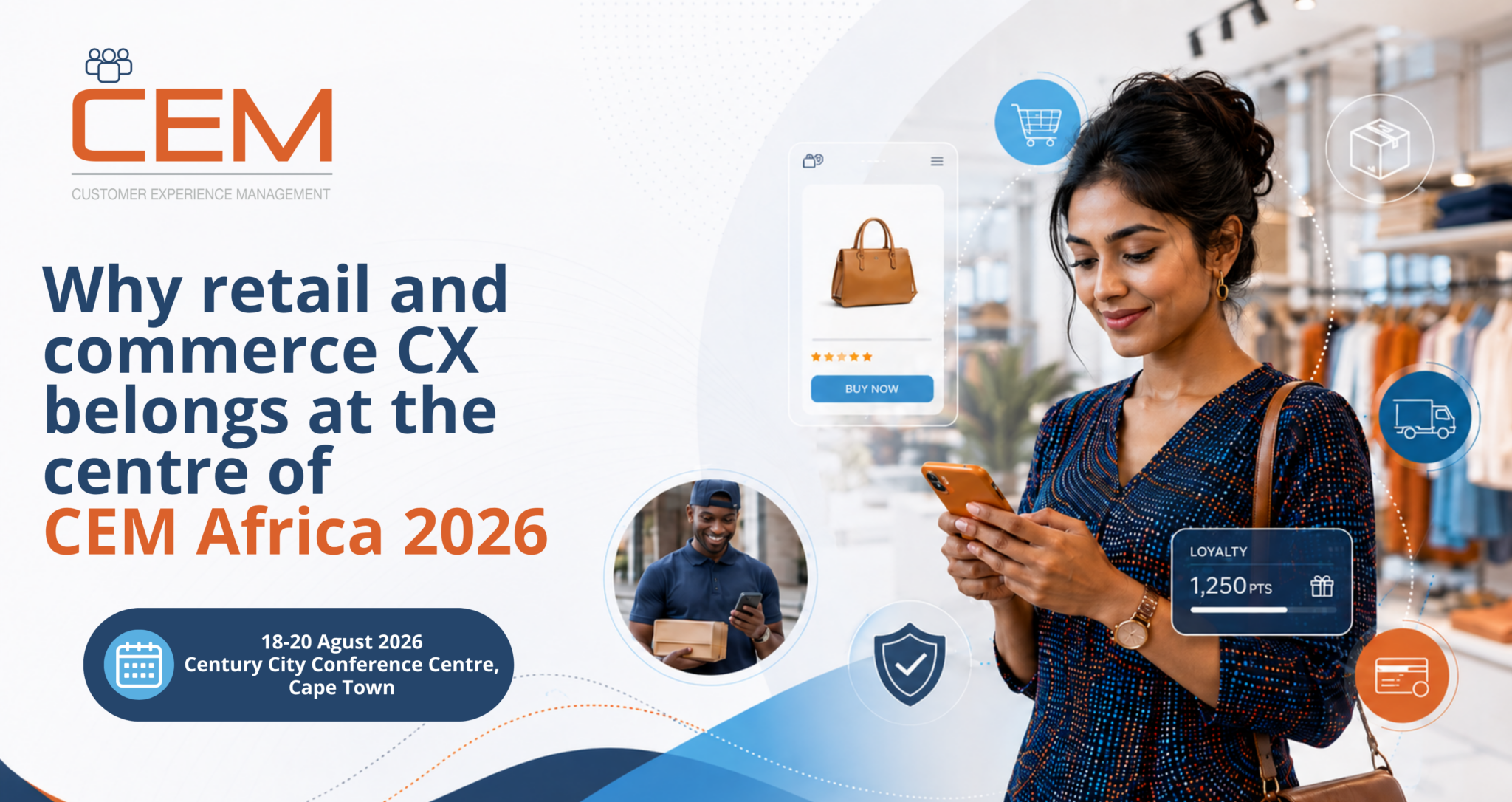
Retail and commerce have become one of the most important testing grounds for customer experience. Every day, customers move between physical stores, mobile apps, websites, marketplaces, call centres, payment platforms, delivery networks and service teams.
They expect each interaction to feel simple, connected and reliable, regardless of the channel they choose.
For retailers, eCommerce businesses and commerce-led brands, this creates both pressure and opportunity. The customer journey is no longer defined by one moment of purchase.
It is shaped by everything that happens before, during and after the transaction: discovery, search, stock availability, pricing, payment choice, delivery, returns, service recovery, loyalty and personalisation.
When one of those moments breaks, trust is affected. When they work together, customer experience becomes a driver of growth.
In many industries, customer experience can feel abstract. In retail and commerce, it is immediate, and the evidence for this is well documented.
Research from Qualtrics and ServiceNow has found that around 80% of customers have switched brands at some point because of a poor customer experience.
In a retail setting specifically, research cited in industry customer service studies puts the figure even higher: approximately 68% of shoppers say they have abandoned a purchase because of poor customer service.
The commercial cost is significant too, with customer attrition linked to poor service estimated to cost businesses more than $75 billion a year globally.
A delayed delivery, a failed payment, an unavailable product, a poor return process or an unhelpful service interaction can quickly turn into lost revenue and lost trust.
A seamless journey, by contrast, can strengthen loyalty, increase conversion and deepen the relationship between customer and brand.
This makes retail one of the clearest examples of CX as a commercial discipline, not only about satisfaction, but about operational performance, brand trust, customer retention and measurable business impact.
The modern commerce journey is no longer linear. Customers may see a product on social media, compare it on a marketplace, visit a store, check reviews, use a payment solution, speak to a service agent and complete the purchase later through a different channel.
This complexity is playing out against a backdrop of rapid growth.
Africa’s e-commerce market was valued at around $40.5 billion in 2025 and is projected to grow to roughly $56 billion by 2029, with the continent expected to pass half a billion online shoppers as smartphone adoption
continues to climb and more than 60% of transactions are already completed on mobile devices.
Nigeria alone accounts for around a quarter of the continent’s e-commerce revenue, while South Africa remains the most mature and structured market, with Egypt, Kenya and Morocco developing quickly behind it.
For organisations, the challenge is to make that growing, fragmented journey feel connected. That requires better data, stronger journey design, clearer ownership across teams and a deeper understanding of what customers actually need at each stage.
It also requires a balance between technology and human connection. AI, automation and digital tools can improve speed and scale, but trust still depends on whether the experience feels useful, fair, transparent and human.
ALSO READ: Why call centre CX belongs at the centre of CEM Africa 2026
CEM Africa 2026 will bring this conversation into focus with senior voices from across the retail, eCommerce and commerce ecosystem.
Confirmed speakers already announced for the Cape Town edition include:
The wider retail and commerce line-up being confirmed for the summit spans additional voices from organisations including:
Together, these perspectives span digital retail, customer promise, eCommerce platforms, marketplaces, payments, customer insight, digital optimisation and consumer behaviour.
They reflect the breadth of the commerce CX challenge, from how businesses attract and convert customers to how they serve, retain and build trust with them over time.
Retail and commerce may be sector-specific, but the lessons apply far beyond the sector. The same questions facing retailers are now facing banks, insurers, telecoms, healthcare providers, travel companies and public sector organisations.
How do we create seamless journeys across channels? How do we use customer data responsibly? How do we personalise without becoming intrusive? How do we improve service while managing cost?
How do we build trust in digital and AI-enabled experiences? How do we connect customer experience to commercial outcomes? These are not only retail questions.
They are CX questions, which is why the retail and commerce conversation is so relevant to CEM Africa 2026.
CEM Africa 2026, now in its 14th year, takes place from 18 to 20 August 2026 at the Century City Convention Centre in Cape Town, under the theme Trust, Technology and the Human Future of CX in Africa. The summit brings together senior CX leaders, enterprise decision-
makers and solution providers from financial services, retail, telecoms, insurance, healthcare, logistics and the public sector for three days of strategic sessions, practical workshops and an expanded exhibition floor.
Retail and commerce sit at the heart of that discussion because they show, in practical terms, what happens when customer expectations, operational realities and commercial pressure meet.
As African customers continue to evolve, the organisations that succeed will be those that understand the full journey, remove friction, build trust and create experiences that deliver value for both the customer and the business.
READ NEXT: Siloed thinking is limiting your customer experience – how to improve CX

 Contact Us
VUKA is the trusted media partner to key professionals, policy makers, suppliers and
manufacturers. We provide unparalleled opportunities for industry-wide connection.