
It’s official, Africa’s energy landscape is becoming greener by the day, rapidly shifting towards solar, wind and energy storage projects, overtaking traditional power plants, such as coal.
Last year alone, Africa added a record 11.3 GW of renewable energy capacity, three times that of 2024, with South Africa, Egypt and Ethiopia leading the way.
At this month’s Enlit Africa in Cape Town, the central theme was how Africa can accelerate its renewable energy transition while balancing decentralisation, grid stability and financing.
One of the session highlights was the discussion on the prosumer revolution: Households and businesses increasingly investing in solar and exporting excess power back to the grid.
“Prosumers—private customers who invest in renewables and export excess to the grid—are reshaping the sector. In South Africa, about 7,000 MW has been installed by prosumers, helping to address load shedding.”
So said Babatunde Osadare, Chief Legal Officer at Ikeja Electric in Nigeria, who joined us for a thoughtful interview on the latest developments in the industry on the Enlit Africa expo floor.
Other topics that dominated discussions included the following:
Mobilising climate finance for water resilience was also a dominant theme at the Water Security Africa sessions during Enlit Africa.
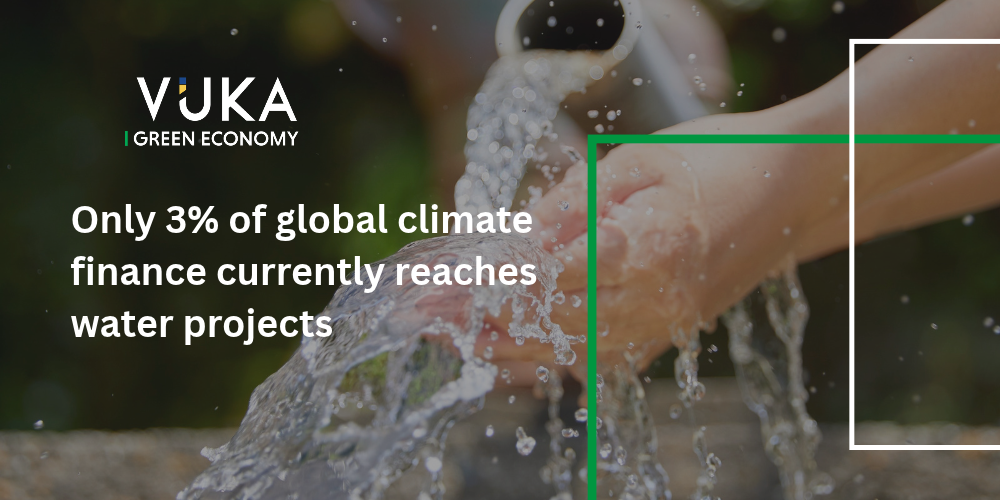
Addressing the massive funding gap – where only 3% of global climate finance currently reaches water projects—requires unlocking blended finance, de-risking investments and transitioning from COP pledges to actual cash deployment.
A core challenge includes an estimated $40 billion gap in climate adaptation funding alone.
Another is the high complexity and low bankability of projects in the sector that often fail to secure private capital due to regulatory uncertainty, cross-border complexities and uncoordinated planning between energy and water utilities.
WEBINAR: Article 6.2 of Paris Agreement – what African carbon project developers need to know
Experts agreed that the water–energy nexus was key for the continent’s energy transition to be holistic, linking electricity, water and community development.
Renewable energy discussions were tied to water security, with smart metering and integrated planning seen as vital for resilience.
“I heard an interesting point from Ramateu Monyokolo at Enlit Africa,” says Nicolette Pombo-van Zyl, Editor-in-Chief of ESI Africa, leading industry trade journal on the continent.
“He is the chairperson of the Association of Sanitation Institutions of South Africa. He noted that when South Africa had an energy crisis, the government quickly launched a procurement programme to bring in new generation resources.”
She continues: “During the COVID pandemic, the government also acted quickly to secure the necessary medicines. When emergency power was required, procurement was the solution again. But now, even though President Ramaphosa has declared a national water crisis, there is still no urgent action to start a water infrastructure procurement programme.
“Another theme that struck me is that across the board, financing remains one of the biggest challenges, whether you look at it from the developer, utility or OEM perspective.
“Everything needs funding, and even though there is money in Africa, securing financing for projects that can actually be built remains difficult. Meanwhile, on the ground, making electricity and water affordable is a continuing battle for all concerned. This is true not just for Africa, but for the whole world.”
The African Union also designated 2026 as the year of “Assuring sustainable water availability and safe sanitation systems to achieve the goals of Agenda 2063.” On 25 May, Africa Day was observed, an annual reminder of the establishment of the Organization of African Unity in 1963, now the AU.
During a session of the AU’s Pan-African Parliament in Midrand in South Africa, the President of the Parliament Fateh Boutbig called on African countries to strengthen cooperation and increase investment in water and sanitation.
Boutbig said access to safe water and sanitation is essential for public health, food security, economic development and environmental sustainability, noting that millions of Africans, particularly women, children and vulnerable communities, still lack adequate services.
“Africa Day 2026 must therefore serve as a renewed call to collective action,” Boutbig said, calling for accelerated investment in water infrastructure, sanitation systems, innovation and community-based solutions.
WEBINAR: Article 6.2 of Paris Agreement – what African carbon project developers need to know
 Contact Us
VUKA is the trusted media partner to key professionals, policy makers, suppliers and
manufacturers. We provide unparalleled opportunities for industry-wide connection.
