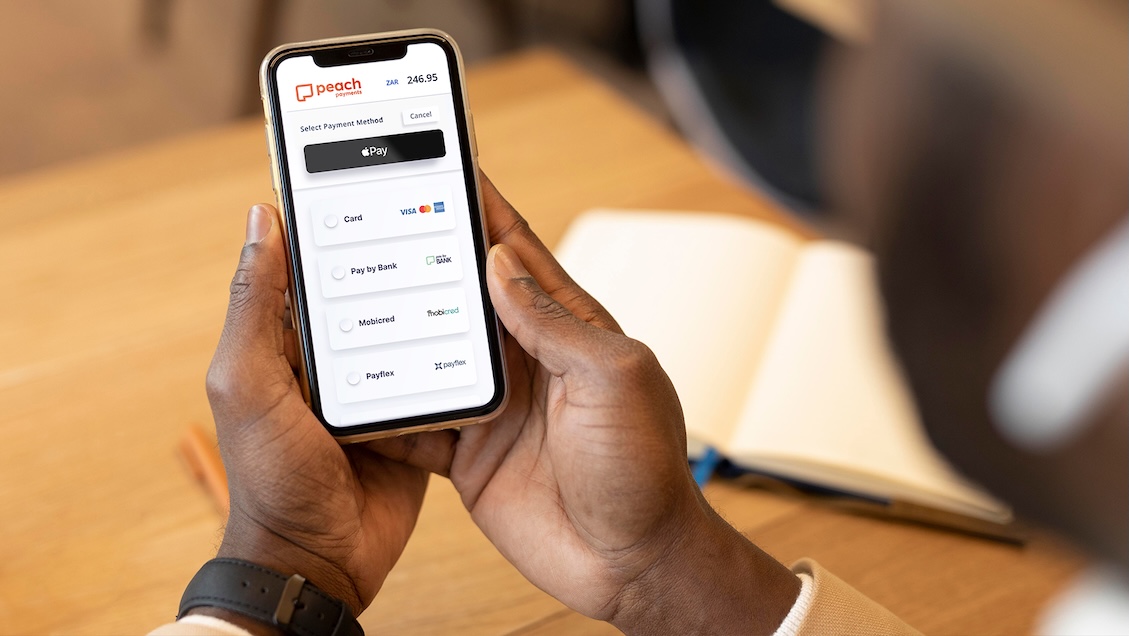
Building a robust pan-African payments business is not for the faint hearted. For over a decade Peach Payments has identified, absorbed and solved the complexity for merchants as they scale.
Terminology such as “easy”, “simple” and “one-click”, now synonymous with payments providers, just scratch the surface of a payments infrastructure decades in the making. Let’s pull back the curtain of how we got here.
For more than a decade, the global financial community has been captivated by the “Africa Rising” narrative.
It is a story told in broad, optimistic strokes: a continent of 1.4 billion people, the youngest median age on the planet, and a digital-first population that famously leapfrogged the desktop era straight into the mobile age.
From a high-level perspective, the trajectory looks like a straight line toward prosperity.
However, as any enterprise leader operating within the African landscape will tell you, the view from the boardroom is often much more granular and far more complex.
There is a profound gap between the optimistic narrative of a unified digital market and the technical, fragmented reality of moving money across borders. In Africa, payments are not just another feature of commerce; they are the primary friction point.
Moving value from Point A to Point B within a country and more so across the continent is fundamentally hard. It is not merely a challenge of writing efficient code or building sleek user interfaces.
It is a grueling exercise in navigating varied capital controls, managing the volatility of dozens of different currencies, and coordinating with a patchwork of disparate banking partners, each with their own legacy systems and regulatory hurdles.
At Peach Payments, our thesis is simple: Success for the modern enterprise does not come from a “simple plug-and-play” solution. In a market this fragmented, simplicity is often a mask for fragility.
True scale requires a robust architecture, a system designed not only to process transactions, but also to withstand the structural chaos of a continent in flux.
ALSO READ: CEM Africa 2026 closes on a high with a strong community response
To understand the scale of the challenge is to understand the sheer volume of value currently being orchestrated behind the scenes. Peach Payments annually processes over USD $6 Billion.
This isn’t just a vanity metric; it represents the lifeblood of thousands of enterprises, from global airlines and insurance giants to domestic retail powerhouses.
Our infrastructure is currently live with over 50 stores of value, such as card acquirers, mobile money wallets, buy now pay later services and more, across the continent.
This is a technical feat that has allowed us to transition from a South African stalwart to a truly pan-African leader. Our footprint now covers the strategic hubs of South Africa, Kenya, and Mauritius, and has recently expanded into the high-growth markets of West Africa.
The acquisition of the West-African payment platform PayDunya was a pivotal moment in this journey.
It wasn’t just about adding dots to a map; it was about gaining entry into the UEMOA Francophone zone, specifically Senegal, Côte d’Ivoire, Benin, Burkina Faso, Togo, and Mali.
This region represents a massive, underserved economic block that operates under a different regulatory and cultural logic than the Anglophone markets of the south and east.
When you look at this regional mosaic, the fragmentation becomes visible. In South Africa, the payment landscape is relatively mature, with card transactions (credit and debit) still dominating approximately 70% of the online market.
However, as you move north, the picture shifts dramatically. In Kenya and across West Africa, “the card” is often the alternative, not the norm.
Here, value is stored and moved through a dizzying array of Alternative Payment Methods (APMs)—digital wallets, vouchers, and mobile money systems like M-Pesa or Orange Money.
Enterprises attempting to scale across these borders cannot simply export their South African payment strategy. They need a partner who understands that in Nairobi, “cash is king” has been replaced by “mobile money is king maker”.
The broader payments industry is currently trapped in what I call the “race to zero.” Competitors are slashing transaction fees in a desperate bid to win market share, treating payment processing as a basic utility, much like electricity or water.
At Peach Payments, we believe that while payments is utility at the pure processing level – there is an inherent complexity and opportunity to differentiate at the layers above.
As an enterprise client this can mean accessing new customers, new countries and more importantly improving conversion rates which will more than compensate for any short term gain from a cheaper basic processing solution.
This realisation has driven our strategic pivot from being a company that simply “moves money” to one that “orchestrates scale”.
We have introduced an updated Payment Orchestration Layer, which serves as the central nervous system for an enterprise’s financial operations. Rather than a linear path from merchant to bank, orchestration allows for:
This leads to our “Open Kitchen” philosophy. Most payment providers treat their internal processes as a black box. You put a transaction in, and hopefully, money comes out the other side.
We take the opposite approach. We want our enterprise partners to see the “messy innards” of tax laws, fraud vectors, and local regulatory requirements.
By providing this level of transparency and visibility, we prove our value as an architect. We handle the complexity so that the merchant can focus on their core ambition: growth.
As we look toward 2026, the definition of “resilience” in fintech is evolving. It is no longer enough to be secure; you must be proactive.
One of our most significant technical levers is Network Tokenisation. At the core of this is a unified token strategy, where Peach Payments provides merchants with a single, PCI-compliant token that represents a customer’s payment credentials.
This token can be safely stored and reused across channels (web, mobile, recurring billing), which removes the need for merchants to handle sensitive card data directly and significantly reduces PCI scope.
More importantly, it solves the problem of “involuntary churn”. For subscription-based businesses, like the home cleaning or meal kit services we partner with, an expired credit card usually means a lost customer.
With network tokenisation and built-in lifecycle management, the token remains valid even if the physical card is replaced, ensuring the billing cycle remains uninterrupted.
Regarding the opportunities of Artificial Intelligence, my perspective is built-on 2 pillars – consumer behavior and risk management. There is no doubt that consumer behavior is evolving and that AI will fundamentally affect digital commerce.
On the risk front, we believe AI governance belongs in the CISO’s (Chief Information Security Officer) office. We don’t use AI just to generate marketing copy.
We use it for proactive threat modeling. In a continent where fraud patterns can shift overnight, AI allows us to identify and neutralise sophisticated fraud vectors before they impact our merchants’ bottom lines.
Furthermore, a system is only as strong as its weakest link. That’s why real-time payouts with bank verification is a gamechanger. The goal is to ensure that every pay-out is verified before a single cent moves.
By confirming account ownership and details in real-time, we eliminate the administrative nightmare of failed disbursements and the catastrophic risk of man-in-the-middle fraud.
At the end of the day, our brand promise is captured in two words: Complexity. Solved. To be clear, “Solved” does not mean the complexity of the African market has been eliminated.
The capital controls are still there, the currencies are still volatile, and the regulations are still fragmented. What “Solved” means is that this complexity has been engineered, contained, and stress-tested by an architect.
We provide our partners with what we call “earned calm”. It is the peace of mind that comes from knowing your payment infrastructure is as ambitious as your business plan.
For the enterprise leader, the message is simple: Stop looking for a tool that promises to make Africa look easy. Start looking for an architect who knows exactly why it is hard—and has built a system to thrive in it anyway.
Rahul Jain – Peach Payments CEO
READ NEXT: Trust is not a soft asset – it’s the infrastructure African commerce keeps neglecting

 Contact Us
VUKA is the trusted media partner to key professionals, policy makers, suppliers and
manufacturers. We provide unparalleled opportunities for industry-wide connection.