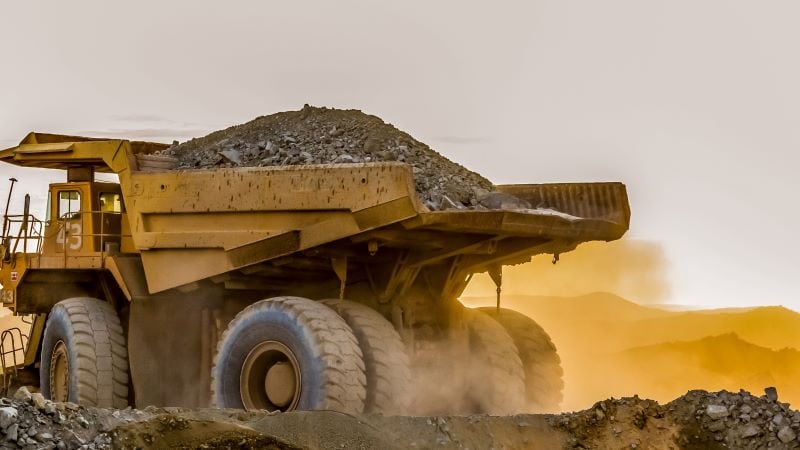
The primary challenge in solid mineral mining using the open cast method and cyclical technologies is the energy intensity of the main technological processes. This accounts for a significant portion, up to 70%, of the total cost of production and haulage operations.
Inefficiency in these operational areas drives up costs and undermines sustainability commitments, placing companies at risk of regulatory and reputational pressures.
Additionally, traditional energy-saving efforts often fall short due to a lack of a welldeveloped energy efficiency methodology that encompasses a comprehensive set of practical solutions.
Therefore, implementing energy efficiency as a central driver of both competitiveness and resilience should not be regarded as a peripheral improvement.
Mining companies incorporating this new strategy are adopting increasingly sophisticated approaches to monitor, measure, and manage their energy consumption.
Strategies now involve technological upgrades and cultural change across the organisation, where decisions that were driven primarily by immediate productivity gains are now reframed to consider lifecycle efficiency and environmental performance.
At the operational level, multiple processes contribute to energy consumption, and even small inefficiencies in one area can havea cascading effect on broader costs.
For example, drilling and blasting techniques affect not only energy use during rock fragmentation but also downstream haulage and processing.
Similarly, the efficiency of comminution equipment such as crushers and mills directly impacts electricity demand. These interconnected processes demonstrate why mines must approach efficiency holistically.
Advances in automation, data analytics, and artificial intelligence (AI) are enabling greater visibility into energy use by detecting inefficiencies and recommending corrective actions.
Remote monitoring systems provide real-time data on equipment performance, fuel burn, and power demand, allowing operators to fine-tune processes and identify anomalies. At the same time, simulation tools enable operators to test different operational scenarios for energy outcomes.
Supporting these tech enablers, predictive maintenance further enhances efficiency by ensuring that machines operate at optimal levels and avoid unplanned downtime. By aligning operational decisions with energy data, mines can achieve significant cost savings while reducing their carbon footprint.
While every stage of mining consumes energy, haulage is often the single most significant contributor. The movement of material from pit to plant is highly energy-intensive, especially in large open cast operations where haul distances can stretch for kilometres.
Diesel-fuelled haul trucks dominate most fleets, accounting for a disproportionate share of fuel consumption and greenhouse gas emissions. As such, haulage optimisation is central to any serious energy efficiency strategy.
Efforts to improve haulage efficiency extend beyond upgrading equipment. Mine planning and pit design play a decisive role in determining hauldistances and gradients, which directly affect fuel use.
Smoother roads, optimised routing, and the strategic location of dumping and crushing facilities can significantly reduce fuel consumption. Digital tools also contribute with autonomous trucks and fleet management systems, providing precise control over speed, braking, and acceleration to minimise wasted energy.
The industry is also exploring alternatives to diesel-based haulage. The electrification of fleets, the use of trolley assist systems, and trials of hydrogen fuel cell vehicles are part of a broader movement to decarbonise mining logistics.

While the adoption of these technologies remains uneven, the trajectory will see energy-efficient haulage solutions becoming integral to long-term competitiveness.
Case study: Haulage optimisation for sustainable gains
A case study conducted at the Gol-e- Gohar iron ore mine in Iran highlights how operational improvements in truck dispatching and fleet management can deliver both economic and environmental benefits.
The study was published in a Master of Science thesis by Mohammadreza Kazemi Ashtiani (2023): An integrated stochastic multiobjective simulation and optimization framework for fuel-efficient truck dispatching in open-pit mines.
The introduction of a fuel-efficient dispatching model proved to be one of the most impactful strategies. This optimisation model achieved up to a 6% fuel reduction consumption per tonne ofproduction, amounting to a savings of 20 000 litres over a simulated 10-day period with 12-hour daily operations.
Because fuel consumption serves as a proxy for greenhouse gas emissions, these savings also directly contributed to lowering the mine’s carbon footprint without compromising production targets.
The study approach also successfully achieved targets while also moving 3.74% more waste material. In terms of fuel efficiency, it consumed 2.88% less fuel per tonne of ore produced than the dispatch system, resulting in an additional savings of more than 12 000 litres in the base scenario.
Fleet composition emerged as another decisive factor for operational success. In scenarios without truck failures, a heterogeneous fleet of 20 CAT 785C and 5 CAT 793C trucks performed best in meeting production needs while reducing fuel consumption.
However, once failures were introduced, ahomogenous fleet of 30 CAT 785C trucks offered greater resilience. The flexibility of smaller trucks enabled production continuity, whereas larger trucks proved more effective in hauling waste where hourly hopper capacity constraints were less restrictive.
The stochastic modelling of truck failures demonstrated their significant effect on productivity. Downtime resulted in lower equipment use and production rates, with a direct reduction in tonnes per gross operating hour.
The findings reinforced the necessity of mitigation strategies, such as maintaining substitute trucks or stockpiles, to offset unexpected losses caused by equipment failures. Finally, the study underscored the importance of adopting a multiobjective optimisation approach.
By integrating goals such as minimising deviations from production targets, reducing shovel idle time, cutting truck wait times, and lowering fuel use, the framework delivered a balanced operational strategy.
Although energy efficiency and haulage optimisation can be viewed as distinct areas, their integration magnifies overall impact. Efficient drilling and blasting reduce the energy needed for both hauling and processing.
Similarly, optimised haulage reduces the energy intensity of downstream operations. Recognising these interconnections ensures that mines avoid implementing efficiency strategies in isolation but rather as part of a comprehensive operational model.
Digital technologies facilitate this integration by linking data across the mining value chain. Advanced simulation tools enable managers to test various scenarios and assess the trade-offs between energy, cost, and productivity.
By modelling haul routes, processing capacity, and equipment performance together, mining companies can identify solutions that maximise efficiency across the board rather than shifting costs from one process to another.
The pressure on mining companies to improve energy efficiency will only intensify. Energy costs are unlikely to decrease, and the global transition towards low-carbon economies places additional demands on heavy industries.
Mines that fail to adapt risk financial losses and diminished access to capital, as investors increasingly screen for environmental performance. The most successful operators will be those who embed efficiency into their organisational culture.
This means moving beyond ad hoc projects to develop long-term strategies with clear targets, continuous monitoring, and cross-functional collaboration with human resources in mind.
It also involves fostering innovation, whether through partnerships with technology providers, participation in industry consortia, or investment in research and development.
 Contact Us
VUKA is the trusted media partner to key professionals, policy makers, suppliers and
manufacturers. We provide unparalleled opportunities for industry-wide connection.