Interview Summary:
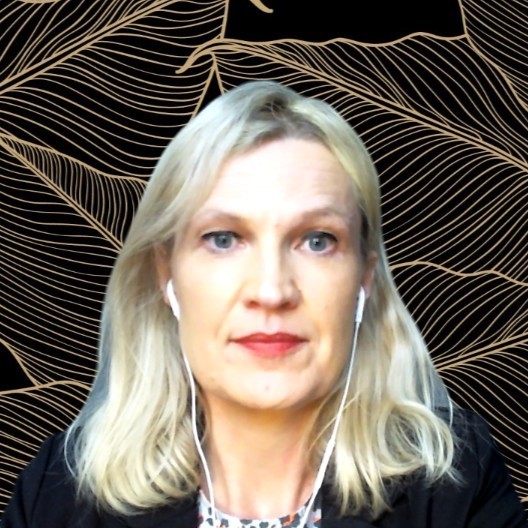
The interview with Marianne Haahr, Executive Director of the International Advisory Panel on Biodiversity Credits (IAPB), highlights the growing role of biodiversity credits in bridging Africa’s nature financing gap. She explains how the IAPB, launched by the UK and France, works with policymakers and innovators to build high-integrity markets through initiatives like the Policy Coalition and a community of practice. Africa’s biodiversity and existing carbon market infrastructure position it well to benefit from these instruments. Haahr stresses the importance of collaboration at events like AGES, which foster accountability and concrete action, and sees Africa at the start of a promising innovation curve.
Thank you for joining us. Please can we start with some background on you, the IAPB, your members, and your goals.
Hi everyone, it’s such a pleasure to be here. My name is Marianne, and I’m the Executive Director of the International Advisory Panel on Biodiversity Credits (IAPB). The IAPB was launched by the UK and French governments, with President Macron announcing it in 2023, shortly after the adoption of the Kunming-Montreal Agreement in late 2022. That agreement includes Article 19, which encourages governments to develop innovative financing instruments to meet biodiversity targets—biodiversity credits fall into that category.
France and the UK wanted to avoid repeating the mistakes made in voluntary carbon markets. Their aim was to build biodiversity credit markets with integrity at the core, learning from past experiences.
Tell us more about the projects you are involved in.
We believe nature credit markets will develop both on the voluntary side—where companies invest in credits to secure supply chains and ecosystem services—and on the compliance side, which will likely be the stronger driver. Examples include the UK’s biodiversity net gain regulation and the long-standing wetland mitigation market in the US.
One of our major initiatives is the Policy Coalition, launched at COP30 in Berlin. It brings together countries worldwide to share experiences and shape regulatory frameworks for nature credit markets. This platform helps governments move from broad commitments to concrete policies.
Alongside this, we run a community of practice with 45 nature credit developers and issuers, including several in Africa. This ensures we stay grounded in real-world practice, not just policy discussions. The community engages in peer learning and exchanges with governments, helping make markets practical, cost-efficient, and high-integrity.
How important is the continent for the future of high-integrity biodiversity credit markets?
Africa is crucial. The continent is home to three mega-biodiverse countries and vast biodiversity overall, yet it receives only about 6% of global nature financing flows. While nature credits won’t close the entire funding gap, they can simplify investment in nature.
Investing in biodiversity is complex, which is why it often doesn’t happen at scale. Nature credits provide a standardised, tokenised, results-based instrument—third-party assured—that makes it easier for companies, financial institutions, and philanthropists to allocate capital confidently. This offers Africa a powerful tool to bridge its biodiversity funding gap.
You are working in a system that is constantly evolving and changing. What are the main challenges in your view?
That’s exactly why we work with the policy forum and conduct landscape analyses. At COP30 in Berlin, we launched the global baseline, mapping existing nature credit policies and regulations worldwide and classifying them into market archetypes. This knowledge is regularly updated to guide our Policy Coalition members. Currently, the baseline identifies 19 existing frameworks globally.
On the practice side, our community of 45 issuers and developers continues to grow, providing bottom-up insights. We’ve also launched Follow the Buyer, a database tracking biodiversity credit transactions. By interviewing buyers, we aim to understand demand drivers and motivations in the voluntary market. Together, these efforts help us anticipate market trends and challenges.
How is Africa positioned in your view to take advantage of this burgeoning opportunity?
Africa is well positioned, thanks to its biodiversity and relatively lean capital markets. Nature credits don’t require heavy infrastructure. Countries with existing carbon credit markets can adapt their registries to include biodiversity credits, making the transition cost-efficient.
For mega-biodiverse countries like Gabon, pilot projects with communities of practice are a good starting point. They can also draw on our global baseline of 19 regulations to learn from peers with similar environmental assets and design effective markets.
At the upcoming AGES, you are part of a workshop on biodiversity credits. Can you give us a preview of your expectations and what your message will be?
At the AGES session, I hope we can identify concrete actions to help Africa take the next steps. We are already working in Southern Africa with the Sustainable Finance Coalition to launch a SADC biodiversity credit policy lab. This initiative will support countries in piloting regulations and policies for both voluntary and compliance markets.
I also expect discussions with companies and financial institutions. For example, banks might explore incorporating biodiversity uplift into lending requirements, while corporates—especially TNFD adopters—could use credits to mitigate risks tied to nature dependencies. The more specific and actionable the outcomes, the better. I’m looking forward to co-creating these next steps with participants.
How important is an event such as AGES for the continent?
It’s extremely important. For Africa—and indeed for any continent—bringing together the collective brainpower and action power is vital. When people gather in person, look each other in the eye, and hold one another accountable, it drives more concrete action.
Nature credits require systemic change. That means financial institutions, corporates, policymakers, and project developers all need to sit at the same table to map out the steps each can take to accelerate these markets and deliver finance for nature in Africa. AGES provides a powerful platform for exactly that kind of collaboration.
Anything you would like to add?
I’d just emphasise that Africa already has a strong foundation to build on. Within our community of practice, we’re working with several projects based on the continent, so we’ll enter these conversations with fresh insights. But this is only the beginning of the innovation curve. There’s much more to come, and we’re excited to see how Africa continues to shape the future of biodiversity credit markets.
 Contact Us
VUKA is the trusted media partner to key professionals, policy makers, suppliers and
manufacturers. We provide unparalleled opportunities for industry-wide connection.